

-
Introduction to Pfumvudza and Conservation Agriculture4 Kappaleet
-
Planning and Preparing the Pfumvudza Plot4 Kappaleet
-
Soil Management and Mulching4 Kappaleet
-
Digging Planting Basins (Planting Holes)4 Kappaleet
-
Sowing and Planting Techniques4 Kappaleet
-
Crop Management and Care4 Kappaleet
-
Harvesting and Post-Harvest Handling4 Kappaleet
-
Climate Resilience and Sustainability Practices4 Kappaleet
-
Economic and Social Aspects4 Kappaleet
-
Practical Field Sessions and Demonstrations4 Kappaleet
-
Partnership with Finnish education experts2 Kappaleet
Osallistujat 12


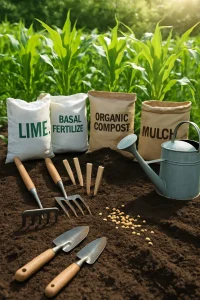
Welcome to the heart of your Pfumvudza journey! In this vibrant sanctuary of sustainable farming, we shift our focus to the essential tools and materials that will not only ease your tasks but also enhance the beauty of your plot. Let’s gather our treasures and optimize your plot for bountiful yields!
Essential Tools
1. Hand Hoe
- Purpose: The trusty hand hoe is a farmer’s best friend in the dance of tilling and cultivating the soil. This simple yet powerful tool will help you dig out weeds and prepare your planting stations with precision.
- Tip: Opt for a hoe with a sturdy, comfortable grip to ensure you can work over long hours without fatigue.
2. Rake
- Purpose: A rake isn’t just for cleaning leaves! It will smooth out your beds, allowing sunlight and moisture to nourish your crops. This simple tool is crucial for spreading mulch evenly across the plot.
- Tip: Select a rake with flat tines to better even out the soil and mulch.
3. Measurements: Permanent Marking Pegs
- Purpose: Establish clarity! These pegs will guide you as you design your plot layout, ensuring you maintain the steady 75cm spacing between rows.
- Tip: Use durable wooden or metal pegs that can withstand seasonal weather changes.
4. Garden Trowel
- Purpose: This smaller but mightier tool will be your winning hand when digging deeper planting holes for each maize seed station. It’s perfect for the finesse work involved in establishing your plot.
- Tip: Carry a handheld trowel for easy maneuverability, essential for precise planting.
5. Spray Bottle or Water Canister
- Purpose: Your crops will thirst for life! A spray bottle allows you to carefully water the newly planted seeds and maintain moisture without washing away the soil.
- Tip: A canister with measurements will help you calculate the exact amount of water per planting station.
Vital Materials
1. Lime
- Purpose: Lime acts as the soil’s magic dust, enriching it with essential nutrients. It helps correct acidity and adds calcium to ensure your maize thrives.
- Tip: Make sure to distribute lime evenly. Each planting station will require a careful measure of 1.363 cups by November 1st.
2. Basal Fertilizer
- Purpose: Fostering fruitful growth starts with proper nutrition. This fertilizer will provide the vital nutrients your maize needs at planting.
- Tip: Effective application is key! Follow the instructions to place 8 cups by November 1st, nourishing your crop from the beginning.
3. Compost
- Purpose: Nature’s own superfood! Using organic compost enriches the soil, promotes microbial activity, and sustains healthy plant growth.
- Tip: If available, add a 350ml tin of compost alongside lime and basal fertilizer for an extra nutrient boost.
4. Seeds
- Purpose: The heartbeat of your plot – maize seeds grounded in quality will usher in a season of abundance.
- Tip: Remember to use 3 seeds per planting station to give your crop a greater chance of flourishing.
5. Water
- Purpose: The elixir of life! Water will reflect a sparkling commitment to plant health, especially crucial after planting when moisture needs are high.
- Tip: Keep a habit of watering gently, aiming for 20 litres of water per planting station or ensuring you catch that first effective rain.
6. Weed Prevention Materials (Mulch)
- Purpose: A protective blanket over the soil, mulch reduces weeds and retains moisture. This cherished cover is vital as you embark on your journey fostering a thriving maize plantation.
- Tip: Organic materials like dried leaves, straw, or grass can serve beautifully as mulch while enhancing soil health over time.
Ready, Set, Grow!
Now that you’ve gathered your essential tools and materials, you’re ready to embark on this farming adventure. The Pfumvudza method is a journey of resilience, community, and flourishing food security. Arm yourself with patience, creativity, and love for the earth, and prepare to witness the magic of nature unfold before your eyes!
Contemplate the joy of harvesting your maize, feeding your family, and contributing to sustainable food practices. Here’s to bountiful plots and flourishing futures! 🚜🌾✨
For any queries or further assistance, feel free to reach out to us at Foundations for Farming, where each step you take leads to sustenance and community enrichment. Happy Farming!