

-
Introduction to Pfumvudza and Conservation Agriculture4 Kappaleet
-
Planning and Preparing the Pfumvudza Plot4 Kappaleet
-
Soil Management and Mulching4 Kappaleet
-
Digging Planting Basins (Planting Holes)4 Kappaleet
-
Sowing and Planting Techniques4 Kappaleet
-
Crop Management and Care4 Kappaleet
-
Harvesting and Post-Harvest Handling4 Kappaleet
-
Climate Resilience and Sustainability Practices4 Kappaleet
-
Economic and Social Aspects4 Kappaleet
-
Practical Field Sessions and Demonstrations4 Kappaleet
-
Partnership with Finnish education experts2 Kappaleet
Osallistujat 12

Step-by-Step Demonstration of Digging Basins

Jukka 9.5.2025
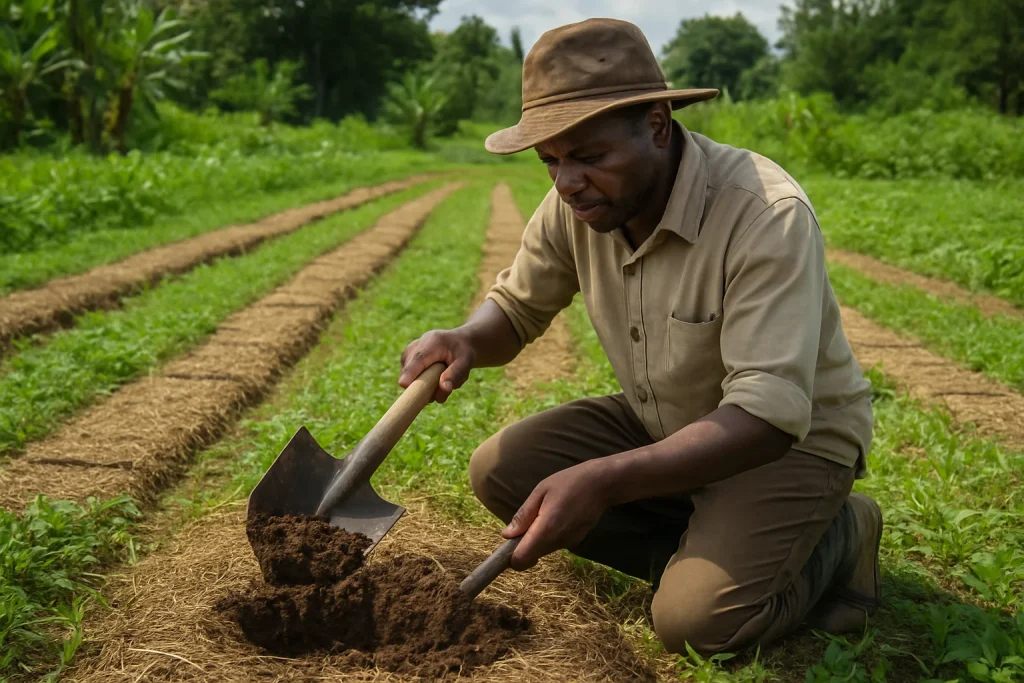
Welcome to this hands-on guidance section of our enchanting Pfumvudza journey! Today, we will transform your field into a flourishing landscape of potential by learning how to dig planting basins. With sustainability at the forefront, this method facilitates not only personal growth but community prosperity, helping smallholder farmers like you thrive. Follow these sequential steps, and allow your plot to flourish!
Step 1: Prepare Your Field
Before we dive into the heart of digging, let’s ensure that our playing field is set, much like a blank canvas awaiting a masterpiece:
-
Weed Management:
- Begin by ensuring your field is weed-free. Clear any remnants from the harvest to give your new plants a head start. Remember, weeds are your garden’s party crashers!
-
Mulch:
- Mulch around your field throughout the winter. This will not only suppress unwanted weeds but also enrich the soil’s goodness, creating a nurturing environment for your seeds to flourish later on.
Step 2: Mark Your Territory
With your field cleaned up and mulched, it’s now time to create a layout!
-
Pegging the Field:
- Use permanent pegs to mark out your field dimensions. This visual guide is crucial for maintaining straight rows and ensuring efficient use of space.
-
Establish your Plot:
- Determine that your plot will measure 39 meters long and 16 meters wide. This is the magic formula, my friend!
Step 3: Digging the Planting Stations
Now to the fun part! Time to dig those basins:
-
Setting the Rows:
- Start by running 52 rows across the slope. Ensure they are beautifully 75cm apart to allow for ample growth and sunlight.
-
Digging Planting Stations:
- With your trusty spade or hoe, dig 28 planting stations per row. Each station should be spaced 60cm apart within the row itself.
(Tip: Aim for a steady rhythm to keep fatigue at bay while digging!)
- With your trusty spade or hoe, dig 28 planting stations per row. Each station should be spaced 60cm apart within the row itself.
-
Total Calculation:
- For your plot, you’ll end up digging a grand total of 1456 stations. It might seem like a tall order, but remember, every solid effort will bear fruit!
Step 4: Soil Nutrients
Once your basins are lovingly prepared, it’s time to nourish your soil:
-
Check for Weed-Free Conditions:
- By October 25th, make sure your field is still a weed-free zone to give your plants the best start. Spring cleaning should be a constant!
-
Laying Down Lime and Compost:
- By November 1st, sprinkle 1363 cups of lime from Pack 1 into your basins to rebalance the soil. If possible, add 1 x 350ml tin of compost to enhance the richness!
-
Applying Basal Fertilizer:
- Don’t forget your 8 cups of basal fertilizer from Pack 2 to promote solid root development. Cover the lime and fertilizer carefully, leaving a planting depth of 3 cm by the end of October.
Step 5: Planting the Seeds
Finally, let’s bring the basins to life!
-
Seed Preparation:
- By November 27th, prepare your seeds from Pack 10.
-
Planting Seeds:
- Plant 3 seeds per hole, filling each station with love and care. Water each station generously with 20 liters or wait for the first effective rain.
Step 6: Care and Maintenance
To ensure a bountiful harvest, continue with these tasks post-planting:
-
Thinning:
- After three weeks of emergence, thin your plants down to 2780 lively plants per station for optimal growth.
-
Top Dressing and Weeding:
- Immediately following thinning, treat your plants with 7723 cups from Pack 2772, applying it 9cm from the plant. Don’t forget to perform that all-important first weeding!
-
Pest Management:
- After about 28 days following the first rains, remember to treat for stalk borer to protect your crops.
-
Second Top Dressing:
- When you see the first tassels appear, do a second top dressing with 5 cups from Pack 5, ensuring that also gets covered.
-
Final Touches:
- After topdressing, continue your weeding efforts before the joyous hurrah of harvesting and laying stalks down for mulch next season!
Conclusion
And there you have it! A thorough, imaginative step-by-step guide to digging planting basins using the Pfumvudza method. Remember, each hole you dig is a step towards nourishment and food security for you and your community. Now arm yourself with this knowledge, dig deep, and may your field produce an abundant harvest of joy! 🌾
For more information or support, feel free to reach out:
- Foundations for Farming
- Cnr Domboshawa/Glen Forest Rd, Glenforest, Harare
- Tel: +263 (0) 772 136 780 or +263 (0) 772 313 589
- Email: [Contact Us]