

-
Introduction to Pfumvudza and Conservation Agriculture4 Kappaleet
-
Planning and Preparing the Pfumvudza Plot4 Kappaleet
-
Soil Management and Mulching4 Kappaleet
-
Digging Planting Basins (Planting Holes)4 Kappaleet
-
Sowing and Planting Techniques4 Kappaleet
-
Crop Management and Care4 Kappaleet
-
Harvesting and Post-Harvest Handling4 Kappaleet
-
Climate Resilience and Sustainability Practices4 Kappaleet
-
Economic and Social Aspects4 Kappaleet
-
Practical Field Sessions and Demonstrations4 Kappaleet
-
Partnership with Finnish education experts2 Kappaleet
Osallistujat 12

Adapting to Drought and Erratic Rainfall

Jukka 9.5.2025
Introduction
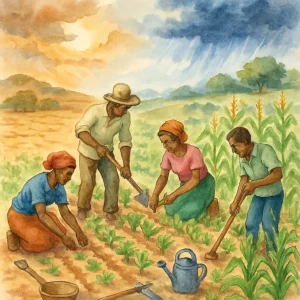
In a world increasingly shaped by climate change, the ability to adapt our farming practices to meet the challenges of drought and unpredictable rainfall has become essential. The Pfumvudza method embodies resilience, ensuring that smallholder farmers have the tools and strategies they need to thrive amid these uncertainties. Let’s embark on this segment of our course, where we will explore the adaptive strategies essential for coping with climate-induced water challenges.
Understanding the Climate Reality
As we delve into the specifics of the Pfumvudza method, it is crucial to understand the impact of erratic rainfall and severe drought on agricultural productivity. The shift in rainfall patterns affects crop growth, planting schedules, and the overall sustainability of our farming systems. However, armed with the right strategies—rooted in conservation agriculture—we can turn these challenges into opportunities.
Creating a Resilient Field: Step-by-Step Guide
Now, let us spell out the Pfumvudza method’s practical steps for creating a resilient field that can withstand climate fluctuations, particularly focusing on drought adaptation. The following steps are not just tasks; they are seeds of wisdom planted in the soil of knowledge, ready to bloom into fruitful harvests.
-
Marking Out Your Field: The Winter Blueprint
- As winter sets in, armor yourself against the elements by marking out your field with permanent pegs. This acts as your guiding star, ensuring you can successfully navigate through the upcoming planting season.
- Remember, your field is your canvas—keep it weed-free and blanket it with mulch to foster moisture conservation.
-
Planting Station Construction: A Radical Approach
- Digging planting stations becomes a labor of love and foresight. Create 52 rows, spaced 75cm apart. This thoughtful configuration is designed to maximize water efficiency while allowing for rainwater soaking.
- The in-row spacing of 60cm and a row length of 16m—home to 28 planting stations—translates into an astute arrangement. Multiply this meticulously planned layout and dig a total of 1456 stations per plot, thus building the backbone of your sustainable crop system.
-
Soil Preparation: Nurturing Our Earthly Foundation
- Before the planting commences, it is critical to ensure your field is weed-free by October 25th—a date to mark on your calendar with bold strokes.
- Adding lime (1363 cups) and compost (one 350ml tin, if available) boosts soil health, while basal fertilizer (8 cups) ensures your seedlings begin life with ample nourishment.
-
Strategic Planting: Seeds of Tomorrow
- On the precipice of hope, use 20 liters of water per station or wait for the first effective planting rain to coax your seeds into the earth. This is when your dreams begin to sprout!
- After planting 3 seeds per hole by November 27th, nurture them carefully; three weeks later, thin to maintain a healthy harvest density of 2780 plants.
-
Ongoing Care: Weeding and Top Dressing
- A well-tended field requires relentless commitment. After thinning, give your plants a fresh boost by applying the first top dressing (7723 cups) immediately—9cm from each plant to avoid hindrance.
- Weeding becomes a rhythmic dance—choreographed actively throughout the growth cycle. Protect your green companions from pests by applying stalk borer treatment 28 days after the first rain, reinforcing the battle against the elements.
-
Final Touches: Harvesting Abundance
- As tassels emerge, a second top-dressing (5 cups) nourishes your plants for that final growth push. Celebrate the fruitful harvest with joy; this is your hard work coming to fruition.
- In reverence of nature, conduct final weeding and lay stalks down for next season’s mulch—thus nurturing the circle of life and soil.
Conclusion
Adapting to drought and erratic rainfall is not simply about surviving; it’s about thriving against the odds. The Pfumvudza method equips smallholder farmers with sustainable practices that build resilience and ensure food security. By being proactive in creating agro-ecosystems that are attuned to the rhythms of nature, we forge a pathway toward success.
As we proceed to our next topics in Climate Resilience and Sustainability Practices, let this knowledge fortify you—empowering your journey as guardians of the land, champions of sustainable farming, and beacons of hope in our communities.