

-
Introduction to Pfumvudza and Conservation Agriculture4 Kappaleet
-
Planning and Preparing the Pfumvudza Plot4 Kappaleet
-
Soil Management and Mulching4 Kappaleet
-
Digging Planting Basins (Planting Holes)4 Kappaleet
-
Sowing and Planting Techniques4 Kappaleet
-
Crop Management and Care4 Kappaleet
-
Harvesting and Post-Harvest Handling4 Kappaleet
-
Climate Resilience and Sustainability Practices4 Kappaleet
-
Economic and Social Aspects4 Kappaleet
-
Practical Field Sessions and Demonstrations4 Kappaleet
-
Partnership with Finnish education experts2 Kappaleet
Osallistujat 12


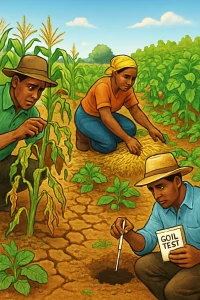
Welcome, aspiring agrarians! As we embark on this splendid journey into the world of Pfumvudza, it’s paramount that we indulge not just in theories and principles, but in real-life challenges that smallholder farmers face on their journey toward sustainable agricultural success. Consider this lesson to be an engaging playground where theory meets reality—where we sharpen our problem-solving skills as we navigate the intricate dance between crops and challenges.
Introduction to Real-Time Problem-Solving Scenarios
In the vibrant tapestry of agriculture, no two days are identical, and the field is filled with surprises! Whether it’s unexpected weather, invasive pests, or unplanned complications in the planting process, being able to tackle real-life scenarios head-on is essential for effective farming. Here, we shall delve into meaningful situations farmers regularly encounter and ponder potential solutions rooted in the Pfumvudza method. Let’s ignite our creativity and put our learned skills to the test!
Scenario 1: The Unexpected Drought
Context: It’s mid-November, and the rains that are typically expected have not yet arrived. Your field is prepared, and the planting stations are ready. However, without rain, the seeds cannot germinate.
-
Questions for Reflection:
- How can you ensure that your seeds remain viable amidst this unexpected drought?
- What pre-emptive strategies might you have implemented to mitigate this risk?
-
Suggested Solutions:
- Consider using soil moisture management techniques! Mulching is your friend. Mulch helps maintain moisture levels in the soil. If you’ve mulched during winter, this will greatly support water retention.
- Explore the possibility of planting drought-resistant crop varieties or utilizing water-holding gel in your planting stations to sustain the seeds until rainfall arrives.
Scenario 2: Pests and Diseases EmergencY
Context: A few weeks after your seeds have emerged, you notice wilting and unusual discoloration on your maize plants. A closer inspection reveals pest infestations, possibly stalk borers, threatening your hard-earned crop.
-
Questions for Reflection:
- What integrated pest management practices can you employ to tackle this issue?
- How can you preemptively protect your plants during their growth phase?
-
Suggested Solutions:
- Implement timely pest management! Applying a biological control strategy, such as introducing natural predators or using companion planting, can help control pest populations.
- As a preventive measure, consider laying out pheromone traps in advance to monitor pest activity.
Scenario 3: Nutrient Deficiency Dilemma
Context: After conducting a site assessment and reviewing your crop’s growth, you begin to notice signs of nutrient deficiency; the maize plants are stunted and discolored, lacking the vigor you expected.
-
Questions for Reflection:
- What steps can you take to assess soil health and nutrient levels?
- How can you balance the need for thoroughness with the constraints of time and resources?
-
Suggested Solutions:
- Carry out simple soil tests to analyze nutrient levels—understanding this aspect is key to rectifying deficiencies!
- As per the Pfumvudza principles, ensure you’ve adhered to the basal fertilization schedule and consider additional top-dressing at the appropriate stages to boost growth during the critical periods.
Scenario 4: Weed Warriors
Context: As the season progresses, vigorous growth of weeds begins to choke your young maize plants, competing for space and nutrients.
-
Questions for Reflection:
- What weeding techniques align with the Pfumvudza method while ensuring you do not damage your crops?
- How can you stay on top of this issue consistently?
-
Suggested Solutions:
- Embrace proactive weeding, ensuring a schedule that allows you to regularly assess your field—don’t let weeds get the upper hand!
- Consider inter-row cultivation, pairing different crop heights to naturally suppress weeds and fortify crop health through natural competition.
Conclusion: The Farmer’s Mindset
As you navigate these real-time problem-solving scenarios, remember—a successful farmer embodies resilience. Drawing on creativity, community knowledge, and the innovative tools available through the Pfumvudza method serves not just personal success, but the larger aim of safeguarding food security for your families and communities.
Thus, armed with learned strategies and a never-die attitude, venture forth into your fields with confidence and creativity, transforming challenges into future triumphs. Now, let’s delve into practical exercises where these scenarios come alive in your immersive learning experience! 🌱