

-
Introduction to Pfumvudza and Conservation Agriculture4 Kappaleet
-
Planning and Preparing the Pfumvudza Plot4 Kappaleet
-
Soil Management and Mulching4 Kappaleet
-
Digging Planting Basins (Planting Holes)4 Kappaleet
-
Sowing and Planting Techniques4 Kappaleet
-
Crop Management and Care4 Kappaleet
-
Harvesting and Post-Harvest Handling4 Kappaleet
-
Climate Resilience and Sustainability Practices4 Kappaleet
-
Economic and Social Aspects4 Kappaleet
-
Practical Field Sessions and Demonstrations4 Kappaleet
-
Partnership with Finnish education experts2 Kappaleet
Osallistujat 12

Organizing Farmer Groups and Knowledge Sharing

Jukka 9.5.2025
Introduction
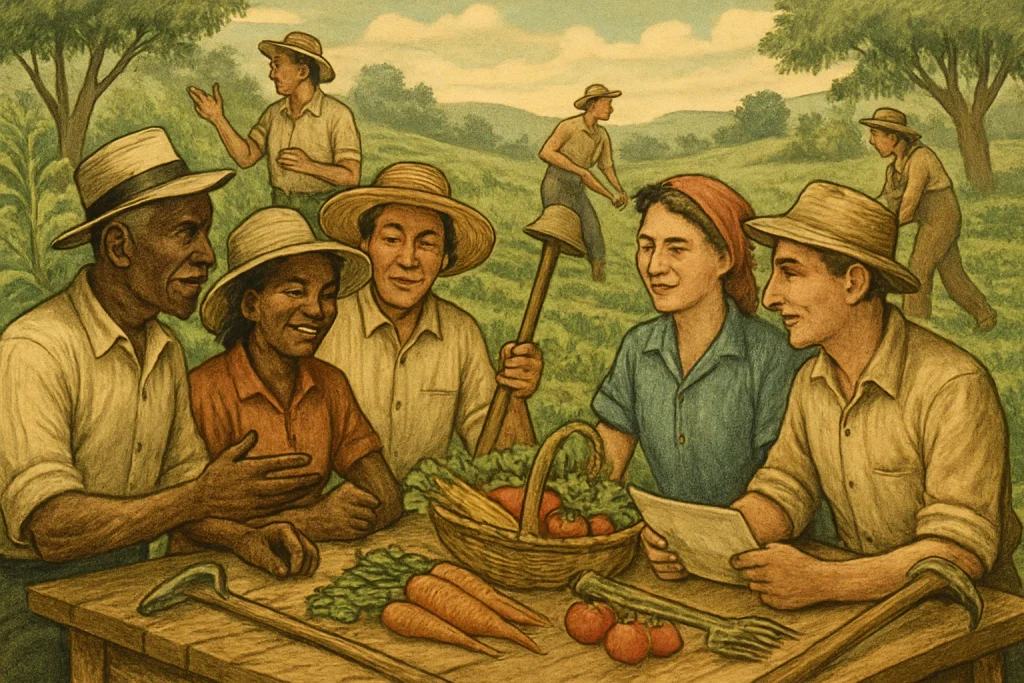
Welcome, intrepid learners! In the fruitful fields of farming, unity can be the fertilizer that spruces the soul of sustainable agriculture. As we dive into the transformative methods of the Pfumvudza approach, let’s take a moment to explore the magic of organizing farmer groups and the boundless benefits that emerge from collective knowledge sharing. Together, we will navigate through the fields of collaboration and creativity that sprout robust communities of smallholder farmers.
The Heartbeat of Farming Communities
In the realm of agriculture, smallholder farmers often find themselves facing the dual challenges of sustaining their livelihoods while cultivating limited land. Many aim to expand their tillage or adopt mechanization in hopes of bolstering their production. Yet, as we’ve learned, these paths rarely lead to harmonious outcomes. Instead, the magic unfolds when farmers unite to share insights, strategies, and success stories. Organizing in groups creates a strong heartbeat for farming communities—where every pulse strengthens knowledge and resilience.
Building a Collective Knowledge Network
Imagine a scenario where a farmer grapples with poor soil conditions or pest appearance. Alone, their attempts may yield disappointment. Now, picture that same farmer, boasting a treasure trove of collective knowledge shared among a network of peers. Through formalized farmer groups, farmers empower each other, leveraging shared resources, like information about effective soil treatments or the best pest control techniques derived from the Pfumvudza method.
Here are some compelling benefits that farmer group organization brings:
-
Exchange of Best Practices: New techniques and insights flow freely among members, creating a vibrant ecosystem of learning where everyone can thrive.
-
Resource Pooling: Farmers in groups can pool funds, share tools, and combine purchasing power to acquire inputs at better prices, making their operations more cost-efficient.
-
Strengthened Advocacy: A united voice is louder than an individual one. Together, farmer groups can advocate for their rights, pressing for policies that resonate with their collective needs.
-
Shared Training Opportunities: Engaging in collective training sessions led by experts, enriched by the local context, helps harvest deeper understandings of sustainable farming practices.
Fostering an Inclusive Environment
It’s pivotal to nurture an inclusive environment within farmer groups where every voice is valued—men, women, the young, and the old. Promoting the participation of marginalized groups fortifies the fabric of the community, paving paths toward greater innovation and productivity.
Practical Steps for Organizing Farmer Groups
-
Identify Leaders: Nurturing leaders from diverse backgrounds within your community balances perspectives and champions collective decision-making.
-
Regular Meetings: Establish a rhythm for convening—whether it’s weekly or monthly—enabling ongoing discussions, updates, and problem-solving.
-
Knowledge Exchange Events: Organize workshops and open-field days where members showcase their skills, share information, and celebrate successes together.
-
Leverage Technology: Navigate through tools like WhatsApp groups or community forums to share insights and experiences in real-time. Technology can break barriers and enhance your network’s reach.
-
Form Partnerships: Connect with local organizations, NGOs, and agricultural experts to empower your group with vital resources and knowledge.
Conclusion
As we sow the seeds of knowledge through the Pfumvudza method, remember that collaboration is the sunshine that nourishes growth. Organizing farmer groups acts as a catalyst for change—instilling hope, resilience, and communal empowerment among smallholder farmers. Together, as a collective entity, you will transcend the limitations imposed by personal struggles and harvest a future rich with sustainable practices and food security.
Let’s embark on this beautiful journey of knowledge sharing and see how our joint efforts can turn the soil of uncertainty into a flourishing garden of possibilities! Happy farming! 🌱🌾