

-
Introduction to Pfumvudza and Conservation Agriculture4 Kappaleet
-
Planning and Preparing the Pfumvudza Plot4 Kappaleet
-
Soil Management and Mulching4 Kappaleet
-
Digging Planting Basins (Planting Holes)4 Kappaleet
-
Sowing and Planting Techniques4 Kappaleet
-
Crop Management and Care4 Kappaleet
-
Harvesting and Post-Harvest Handling4 Kappaleet
-
Climate Resilience and Sustainability Practices4 Kappaleet
-
Economic and Social Aspects4 Kappaleet
-
Practical Field Sessions and Demonstrations4 Kappaleet
-
Partnership with Finnish education experts2 Kappaleet
Osallistujat 12

Cost-Benefit Analysis for Smallholders

Jukka 9.5.2025
Introduction
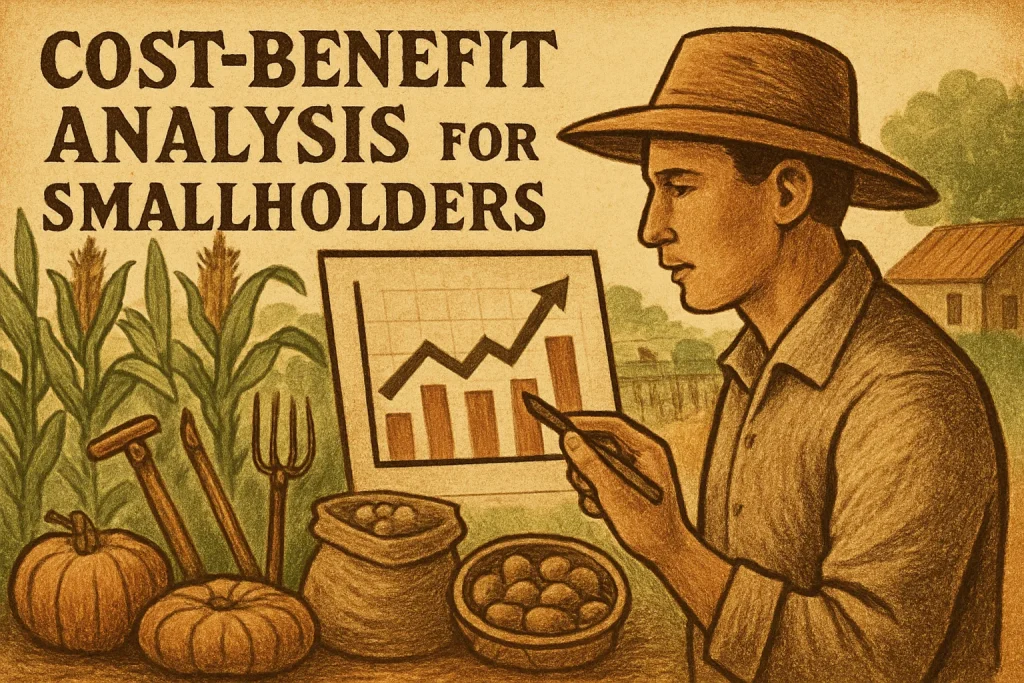
Welcome to our intriguing exploration of Cost-Benefit Analysis (CBA) for smallholder farmers implementing the Pfumvudza method! Understanding the financial aspects behind sustainable farming not only empowers you as a farmer but ensures that the fruits of your labor replenish both your family’s pantry and your community.
In small-scale agriculture, finding financial robustness can feel akin to balancing on a tightrope in a windstorm. You may often hear the rhetoric surrounding needing larger lands or investing in machinery; however, stick with us as we delve into a more rewarding option—leveraging the small plot available to you more efficiently through Pfumvudza!
Why Conduct a Cost-Benefit Analysis?
If you’ve ever ventured into magic, you understand there is more than meets the eye. Likewise, diving into CBA permits you to gain invaluable insights into resource allocation and financial sustainability. Let’s embark on an enchanting journey to understand costs involved in the Pfumvudza method, their results, and ultimately, how to garner a bountiful harvest!
Aligning Your Resources
Before you unfold your treasure map for your Pfumvudza plot, let’s list the various costs associated with this remarkable method:
-
Initial Setup Costs
- Soil Preparation: Weed control, mulching, and digging planting stations.
- Inputs: Buying seed packs, organic fertilizers, and compost.
- Materials: Permanent pegs for marking fields and tools for planting and maintaining.
-
Ongoing Management Costs
- Labour: Spending time weeding, managing crops, and conducting fertilization consistently.
- Water: Ensuring each planting station receives sufficient watering especially until first effective rains.
- Crop Protection: Costs for applying treatments against pests and diseases.
Revenue Generation
Now let’s unlock the other side of our treasure trove to reveal the bounty:
-
Yield Estimation
- Each Pfumvudza plot of approximately 39m x 16m can produce enough maize to feed your family—but let’s quantify it. If every plant provides a robust yield of a cob, you can anticipate generous returns on just a small amount of land.
-
Market Opportunities
- Besides feeding your family, bring your excess produce to the local market! With fair prices, selling your maize can open a stream of income, aiding in family expenses or enabling investments in more inputs or better equipment.
The Gems of Your Analysis
To truly appreciate the dynamics of costs and gains, let’s wrap it all up in a charming CBA formula!
CBA = Total Benefits – Total Costs
- Total Benefits – Calculate the potential revenue from the maize produced, multiplied by the price per cob in the local market.
- Total Costs – Tally all previous costs incurred for setting up and ongoing maintenance.
This simple revelation will empower you in making educated farming decisions and adjusting your methods for maximum efficacy.
Imagining Your Future
As winter whispers nostalgia with the cold, ensure to cultivate those growing seeds of knowledge along with your crops. By revisiting your cost-benefit analysis routinely, adjust for any change—the price fluctuating or water availability—and continuously optimize your methods!
Picture this: You harvest bountiful maize and provide ample food for your family while offering extra to the marketplace. A wonderful circle of sustenance and community upliftment plays right in your hands!
Certainly, Pfumvudza can make waves in the world of smallholder farming, harnessing the expertise of generations and planting them in the soil of possible futures for self-sufficient families in your community.
Conclusion
Culminating our analysis, you can confidently approach farming decisions enriched with calculated insight. Running the numbers may appear daunting at first, but it transforms into a treasure hunt revealing the true hidden costs and benefits of sustainable agriculture!
Be it through meticulous record-keeping, consulting community leaders, or attending agricultural trainings—your journey towards prosperity is ripe with possibilities. Arm yourself with this knowledge, embrace the Pfumvudza methodology wholeheartedly, and watch your efforts transform both your land and life positively. Happy farming!
For more resources on the Pfumvudza method and other steps to guarantee a successful harvest, explore our continuous training modules! 🌽