

-
Introduction to Pfumvudza and Conservation Agriculture4 Kappaleet
-
Planning and Preparing the Pfumvudza Plot4 Kappaleet
-
Soil Management and Mulching4 Kappaleet
-
Digging Planting Basins (Planting Holes)4 Kappaleet
-
Sowing and Planting Techniques4 Kappaleet
-
Crop Management and Care4 Kappaleet
-
Harvesting and Post-Harvest Handling4 Kappaleet
-
Climate Resilience and Sustainability Practices4 Kappaleet
-
Economic and Social Aspects4 Kappaleet
-
Practical Field Sessions and Demonstrations4 Kappaleet
-
Partnership with Finnish education experts2 Kappaleet
Osallistujat 12

Community-Based Approaches to Scaling Pfumvudza

Jukka 9.5.2025
Introduction
In the vibrant tapestry of agriculture, smallholder farmers represent the heartbeat of many communities across Zimbabwe. However, the challenges they face, from inadequate production levels to food insecurity, can often feel like insurmountable mountains. Enter the Pfumvudza method—an innovative solution designed not just for individual farmers but as a key to unlocking communal resilience and sustainability in the agricultural sphere. This lesson explores how collective actions can amplify the reach and impact of the Pfumvudza method, turning isolated efforts into united successes.
The Power of Community in Agriculture
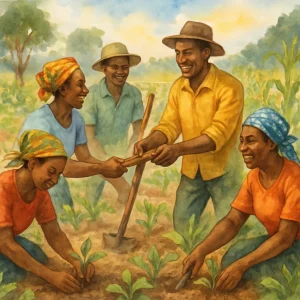
Imagine a garden blooming brightly, each blossom distinct yet part of a greater ecosystem—this is a metaphor for community-based approaches to agriculture. When smallholder farmers come together, they can share resources, knowledge, and experiences, transforming their agricultural undertakings into a collaborative endeavor.
1. The Collective Journey
The Pfumvudza method shines brightest in a community setting. By uniting local farmers, everyone can learn from one another’s successes and challenges. This synergy leads to:
-
Shared Resources: By pooling together, farmers can access tools, seeds, and agronomic support they may not individually afford. Due to economies of scale, what was once a luxury becomes accessible.
-
Local Knowledge Exchange: Each farmer brings unique cultural practices and local insights. This melting pot of agricultural wisdom can lead to innovative adaptations of the Pfumvudza method tailored to specific communities.
-
Solidarity and Support: Facing agricultural challenges alone can be daunting. When farmers unite, they foster a support network—emotionally, financially, and socially—creating a buffer against natural and economic adversities.
2. Scaling Pfumvudza: Strategies for Success
As we delve deeper into community-based approaches, let’s explore the strategies that amplify the effectiveness of the Pfumvudza method:
a. Formation of Farmer Associations
Starting small can lead to great things. By forming local farmer associations, groups can collectively strategize the use of limited resources. These associations can facilitate:
-
Group Training Sessions: Rather than individual training, which can be cost-prohibitive, farmers can learn collectively from trained experts, enhancing comprehension through group discussions.
-
Collaborative Planting Days: Establishing "planting days" fosters camaraderie and accountability among the farmers. By planting together, farmers can facilitate consistency in crop care and stand ready to help one another in times of need.
b. Building Links with Local Agri-Partners
Connecting with local agricultural organizations and NGOs can strengthen the community’s foothold in implementing the Pfumvudza method. Through partnerships, communities can benefit from:
-
Expert Guidance: By collaborating with organizations like Foundations for Farming, farmer associations can tap into expert knowledge and assistance, ensuring adherence to best practices associated with Pfumvudza.
-
Providing Financial Resources: Local partners can help secure grants or funding opportunities that bolster community efforts. With financial stability, initiatives can flourish and expand effortlessly across regions.
3. Championing Champions of Change
Every community has its trailblazers—those pioneering farmers ready to champion the Pfumvudza approach. Identifying and supporting these leaders can tilt the scales in favor of broader adoption:
-
Training Peer Educators: As communities recognize effective champions, training them to become peer educators helps disseminate the knowledge of Pfumvudza practices quickly and effectively.
-
Sharing Success Stories: Highlighting local success stories can motivate other farmers to adopt the Pfumvudza method. When one farmer thrives, it’s a beacon of hope for all.
4. Evaluating and Adapting
Community strength lies in adaptability. Ongoing evaluations help measure the effectiveness of scaling the Pfumvudza methods in a communal context.
-
Workshops and Feedback Sessions: Regular workshops create a space for sharing results, discussing challenges, and collectively adapting strategies. The emphasis on constructive feedback transforms obstacles into opportunities for growth.
-
Monitoring Crop Progress: Community engagement in monitoring will build towards an overall resilience strategy. Knowing what works and what doesn’t offers valuable insights moving forward.
Conclusion
As we conclude this topic, envision the untapped potential of a community coming together around the Pfumvudza method. When collective efforts synchronize, they reshape landscapes, bolster food security, and foster community resilience. By sharing resources, knowledge, and emotions, smallholder farmers can grow not only their crops but also a brighter future for their families and communities.
In the vibrant dance of teamwork, we discover that the real journey towards a sustainable agricultural future lies not just in the fields, but in the unity of hearts and minds, cultivating hope and nourishment for generations to come.
Let’s come together to cultivate change! 🌱✨