

-
Introduction to Pfumvudza and Conservation Agriculture4 Kappaleet
-
Planning and Preparing the Pfumvudza Plot4 Kappaleet
-
Soil Management and Mulching4 Kappaleet
-
Digging Planting Basins (Planting Holes)4 Kappaleet
-
Sowing and Planting Techniques4 Kappaleet
-
Crop Management and Care4 Kappaleet
-
Harvesting and Post-Harvest Handling4 Kappaleet
-
Climate Resilience and Sustainability Practices4 Kappaleet
-
Economic and Social Aspects4 Kappaleet
-
Practical Field Sessions and Demonstrations4 Kappaleet
-
Partnership with Finnish education experts2 Kappaleet
Osallistujat 12

Maintaining Uniformity for Optimal Results

Jukka 9.5.2025
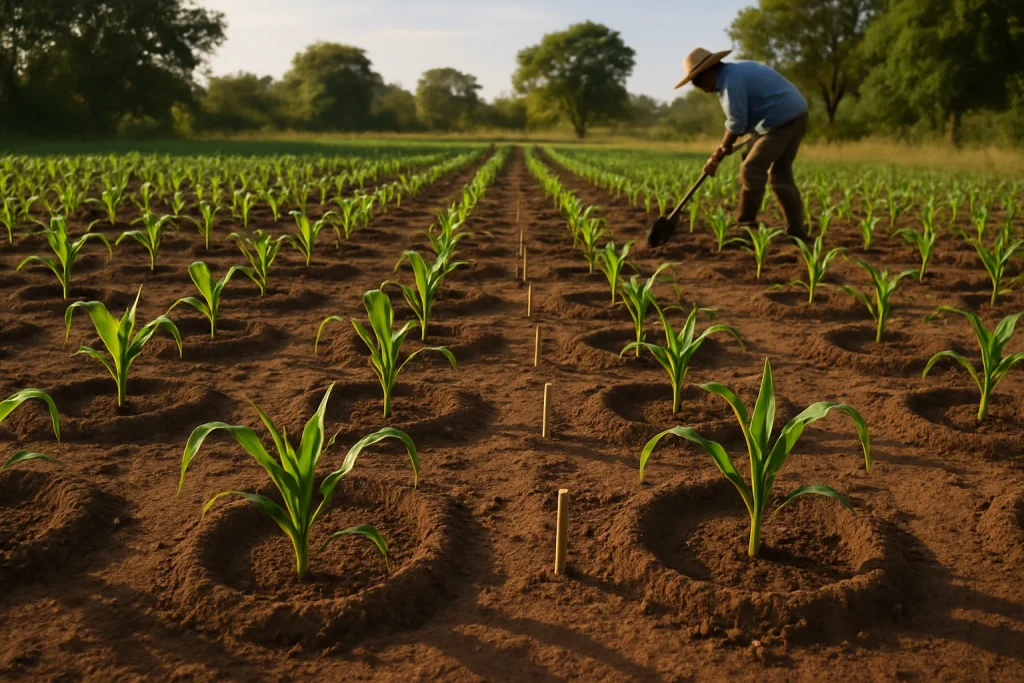
Welcome, courageous farmers, to the enchanting realm of maintaining uniformity in your planting basins! As we delve into this essential topic, we will unveil the secrets to achieving bountiful harvests that reflect your hard work and dedication. With the ancient wisdom of the Pfumvudza method guiding us, let’s unlock the strategies for ensuring that every planting hole becomes a treasure trove of nutritious crops!
Why Uniformity Matters
When it comes to planting with purpose, consistency is your steadfast ally. Consistently spacing your planting stations helps to optimize sunlight exposure, nutrient uptake, and water distribution, creating a thriving environment for your seeds to flourish. Imagine each plant dancing joyously in the sun, each leaf stretching toward the horizon, all thanks to the care and precision of your planting strategy.
Marking Your Territory
The journey to uniformity begins in the cool embrace of winter. Grasp your trusty pegs and venture to your field. With unyielding determination, mark out your plot. Your fields will be like a blank canvas, waiting for the vibrant strokes of your agricultural artistry. Remember:
- Permanent Pegs: Stake them firmly in the ground, for they shall become your guiding stars throughout the planting process. The layout will serve as the skeleton upon which the flesh of your crops will thrive.
The Art of Digging Planting Stations
With your territory marked, it’s time to get our hands in the soil. You will create 52 rows, each spaced 75 cm apart, and the in-row spacing will be 60 cm. Picture this: each station as a cozy bedroom for your seeds, scientifically designed to maximize growth potential!
Digging Depth and Specifications
- Row length: 16 m will host 28 planting stations—which means, dear farmers, you are gearing up to dig 1456 stations per plot. Each station shall cradle 3 seeds, making your richness multiply in the most spectacular fashion.
Tips for Consistent Spacing
-
Methodical Digging: Bring your measuring tape and keep a keen eye on your distances. Start at one end of the row and dig the first hole, then step back 60 cm for the next station. This steadfast rhythm ensures every hole is alike, a symphony of order waiting for growth.
-
Check the Slope: Ensure rows traverse across the slope, embracing the contours of the land itself. This careful positioning will enhance water flow, ensuring that each planting station is baptized in the nourishing rain.
Enrichment and Care
To nurture your maize seedlings, layers of love—lime and fertilizer—must embrace the soil:
-
Weeding and Mulching: Command your soils to remain weed-free before and post-planting. Weeds are like unwanted guests at a feast. Keep your gathering exclusive for your crops by deep mulching, which not only enhances moisture retention but discourages those pesky intruders.
-
Nutrient Rituals: By November 1st, conduct the sacred fertilization ritual. Spread 8 cups of basal fertilizer and covering them with 3 cm of soil ensures they won’t go unnoticed by the burgeoning roots below!
Thinning and Follow-Up Care
After emergence, a week or so into the life of your plants, it’s time for a gentle touch: thinning. Adapt and curate your planting to 2780 plants per station, allowing them the space necessary to reach their full potential.
Further enrich your crops with:
-
Top Dressing: Infuse vitality back into your soil moments after thinning. Distributing 7723 cups of top-dressing, following the ethical distance of 9 cm from the plant, drapes your seedlings in rich nutrition.
-
Weeding: Engage in continual dedication to weeding. It’s an ongoing relationship where you must remain vigilant, scrapping away competitors that seek to deprive your crops of their birthright.
Celebrate the Upcoming Bounty
When harvest season arrives, it will bring you and your family countless blessings. Picture your bounty, as you lovingly lay stalks down for next season’s mulch in an act of giving back to the earth. A weed-free field through winter reflects your commitment, and the cycle of nourishment continues.
Now, fellow stewards of the land, embark on this precise journey through planting visualization! With your newfound knowledge in maintaining uniformity, may your fields flourish and your harvests overflow. Here’s to the thriving communities that your dedication will create! 🌾✨
Should you have questions or require further guidance on the Pfumvudza journey, do not hesitate to reach out. Together, let’s sow the seeds of tomorrow!