

-
Introduction to Pfumvudza and Conservation Agriculture4 Kappaleet
-
Planning and Preparing the Pfumvudza Plot4 Kappaleet
-
Soil Management and Mulching4 Kappaleet
-
Digging Planting Basins (Planting Holes)4 Kappaleet
-
Sowing and Planting Techniques4 Kappaleet
-
Crop Management and Care4 Kappaleet
-
Harvesting and Post-Harvest Handling4 Kappaleet
-
Climate Resilience and Sustainability Practices4 Kappaleet
-
Economic and Social Aspects4 Kappaleet
-
Practical Field Sessions and Demonstrations4 Kappaleet
-
Partnership with Finnish education experts2 Kappaleet
Osallistujat 12

Principles of Conservation Agriculture

Jukka 9.5.2025
Welcome to the enchanting realm of Conservation Agriculture! In this topic, we will unearth the foundational principles that not only define this sustainable farming practice but also the pivotal role it plays in enhancing soil health. Begin your journey by envisioning a world where the earth thrives, boundless in its capability to nourish the generations to come.
What is Conservation Agriculture?
Conservation agriculture is a holistic farming method that harmonizes agricultural production with the preservation of natural resources. It is primarily characterized by three key principles:
- Minimal Soil Disturbance
- Permanent Soil Cover
- Crop Diversification
1. Minimal Soil Disturbance
In the ancient dance of farming, the soil is the supporting actor, deserving of care and respect. By minimizing tillage—reducing the instances of plowing and aggressive soil disturbance—we allow the intricate web of life within the soil to flourish.
This method enhances soil structure, increases moisture retention, and minimizes erosion. Think of it as a protective blanket that cradles the earth, preserving its vitality for generations. Minimal disturbance also aids in fostering a community of beneficial microorganisms that contribute to the nutrient cycle.
Imagine Particularly:
Take a moment to visualize a field where the soil, unturned yet nudged gently by the feet of vibrant crops, remains loyal to its rich components. Each seed planted leads to the emergence of valleys of lush greens, an homage to the earth’s nurturing spirit.
2. Permanent Soil Cover
The second principle of conservation agriculture is akin to giving your soil a hug. By ensuring that the soil is covered with crops or mulch throughout the year, farmers create a protective layer that guards against the unforgiving sun and hostile winds.
Not only does this shield help in preserving soil moisture, but it also prevents erosion and suppresses the growth of weeds. Think of permanent soil cover as nature’s suit of armor that empowers the crust of our earth—the ultimate champion against climate adversities!
Visualize This:
Close your eyes and imagine a vibrant tapestry—mulched ground and burgeoning cover crops, all working together in symphony to protect and nourish the soil’s delicate infrastructure.
3. Crop Diversification
The third principle weaves together a beautifully rich tapestry of biodiversity. Rotating a variety of crops not only promotes soil health but also disrupts pest cycles, reduces disease, and optimizes nutrient availability.
In the heart of every smallholder farmer lies a vibrant world of flavors and aromas thanks to diverse cropping systems that support resilience in farming practices. It’s about cultivating a community of plants that complements one another and breeds harmony among them—each plant a soldier in the army of sustainability, together capable of transforming the landscape into a paradise of productivity.
Picture This:
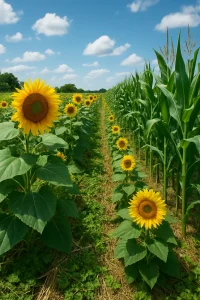
Imagine strolling through a field where sunflowers nod proudly alongside maize, each plant playing its part in a merry brigade that ensures holistic wellness of mother earth.
Link to Soil Health
The synergy of these three principles ultimately leads to the heart and soul of conservation agriculture—enhanced soil health. Healthy soils are rich in nutrients, well-structured, and alive with microbial life. They can absorb water, resist pathogens, and produce food abundantly. The chemicals in the soil interact seamlessly with crops, ushering energy and nutrition into every root, stalk, and leaf.
Through the lens of conservation agriculture, a sustainable ecosystem thrums with life’s rhythm, where every inch of soil is a canvas, painted anew with each season. Here, smallholder farmers can cultivate not just for today’s need, but for generations to come, fostering a legacy of nourishment and sustenance.
Let’s Take Action!
Let’s embark on this exciting journey into the world of conservation agriculture. Through the Pfumvudza method, you can not only practice these principles, but also foster resilience within your farming community, creating a lasting impact on both the land and the people who nurture it. As you navigate through the course, remember—you are the guardians of the earth, and your choices can lead to sustainable futures.
Feel free to explore more about the fascinating connections of each principle in the forthcoming topics, where wisdom meets action and your individual journey unfolds towards a flourishing life in harmony with the environment!
Your next step awaits! Click here to explore the Pfumvudza method and discover more about sustainable agriculture practices.