

-
Introduction to Pfumvudza and Conservation Agriculture4 Kappaleet
-
Planning and Preparing the Pfumvudza Plot4 Kappaleet
-
Soil Management and Mulching4 Kappaleet
-
Digging Planting Basins (Planting Holes)4 Kappaleet
-
Sowing and Planting Techniques4 Kappaleet
-
Crop Management and Care4 Kappaleet
-
Harvesting and Post-Harvest Handling4 Kappaleet
-
Climate Resilience and Sustainability Practices4 Kappaleet
-
Economic and Social Aspects4 Kappaleet
-
Practical Field Sessions and Demonstrations4 Kappaleet
-
Partnership with Finnish education experts2 Kappaleet
Osallistujat 12


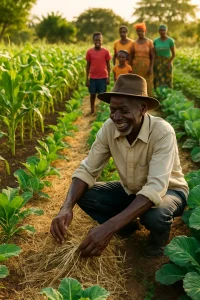
Welcome to a captivating exploration of Pfumvudza—an eloquent solution that resonates with the harmonies of sustainable agriculture. As we embark on this journey, let us peel back the layers of this transformative method that promises not just to feed families but to enrich lives and nurture communities.
Defining Pfumvudza
At its core, Pfumvudza, which translates to “shaping the soil” or “resilient agriculture” in local dialects, is an innovative farming practice that seeks to optimize small-scale farming. It was conceptualized out of urgency; smallholder farmers often grapple with the dilemma of inadequate production on very limited land (typically about 1 to 0.5 hectares). The Pfumvudza method rejects the old adage that more land or heavy machinery is the answer. Instead, it prompts an introspective question: “How much land is truly necessary to feed a family?”
By leveraging the foundational principles of conservation agriculture, Pfumvudza empowers farmers to use their existing plots more efficiently, thus transforming their agricultural outputs and their futures.
The Significance of Pfumvudza in Sustainable Agriculture
Imagine a world where every smallholder farmer could provide enough food for their family without succumbing to the burden of expanding land or the financial strain of mechanization. Pfumvudza is committed to realizing that vision.
-
Resource Efficiency: The method is grounded in sustainable practices, such as mulching, crop rotation, and minimum tillage, which serve to preserve soil health and enhance biodiversity. Rather than exhausting resources, Pfumvudza enriches the land, ensuring it yields productive results year after year.
-
Small but Mighty: Pfumvudza’s splendid framework requires just 39 meters long by 16 meters wide to produce an entire year’s worth of staple maize for a family. This concept empowers farmers to maximize their limited resources by cultivating a small plot effectively, ensuring sustainability over expansion.
-
Resilience Against Adversities: The Pfumvudza method forms a bulwark against climate variability, equipping farmers with the knowledge and skills to withstand and enhance agricultural resilience. By embracing water conservation practices, such as strategic mulching and proper irrigation methods, livelihoods become less dependent on the whims of nature.
-
Community-Driven Growth: Pfumvudza fosters a sense of community as farmers share successes, techniques, and moral support. ‘Together we thrive’ is the doctrine behind this practice—a movement that binds farmers into a supportive network, ultimately building stronger agricultural communities.
The Journey Ahead
As you continue with this course, keep in mind the legacy of Pfumvudza—rooted in dignity and empowerment. Think of it not merely as a method, but as a movement towards self-sufficiency, resilience, and sustainable livelihoods. With each lesson you digest, envision how the Pfumvudza practices can catalyze a revolution in not just your farming but your community and environment.
Are you prepared to unlock the secrets of Pfumvudza? Let’s delve into the next topic and cultivate not just land, but futures, hope, and prosperity.