

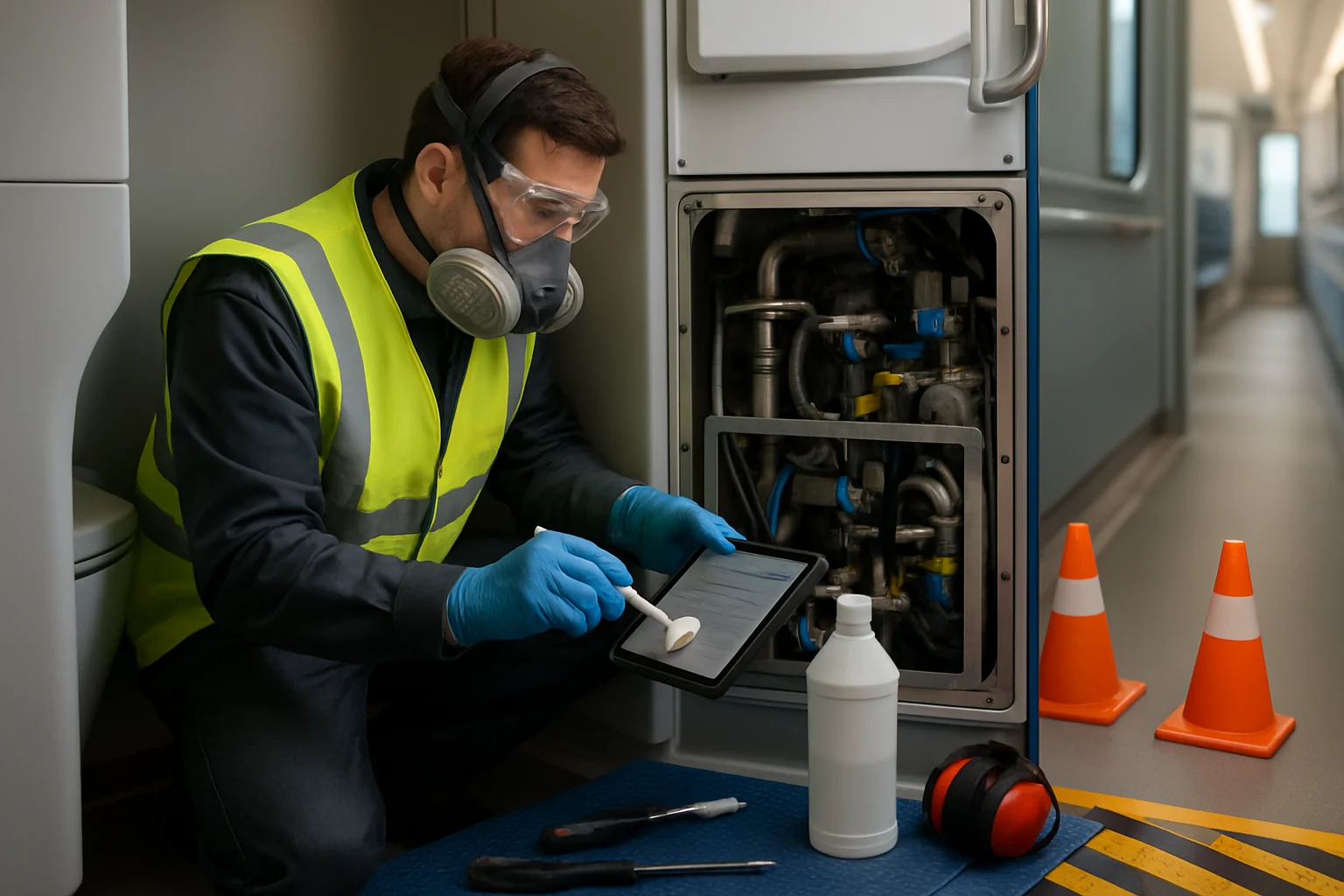
On-board vacuum toilets, preventive maintenance and cleaning (stadler FLIRT DMU)
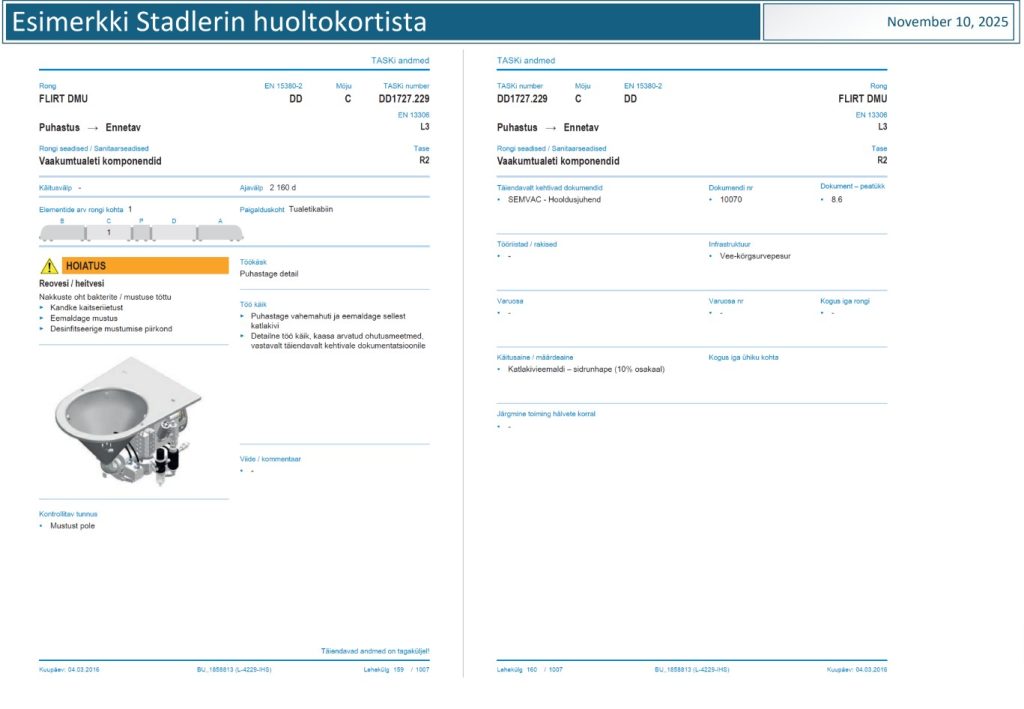
The course covers proactive cleaning, descaling, disinfection, safety and quality requirements for vacuum toilets and associated sanitary components, specifically for Stadler FLIRT DMU equipment. Content covers definitions (preventive maintenance = planned maintenance to prevent failure; vacuum toilet = vacuum toilet system for the transfer and storage of waste; intermediate storage tank = temporary container/separator for waste; scale = mineral deposit, removed with acid-based substances, e.g. 10% citric acid; disinfection = microbiological risk reduction; PPE = personal protection against sewage and infection risks; manufacturer's maintenance instructions such as SEMVAC = binding work instructions). The course also covers requirements and standards (e.g. EN 15380-2, EN 13306), the right tools and chemicals (high-pressure cleaner, acid-based descalers, disinfectants), documentation, deviation procedures and an example of a maintenance interval (160 days). The aim is to provide clear, binding practices for safe and standardised maintenance and cleaning.

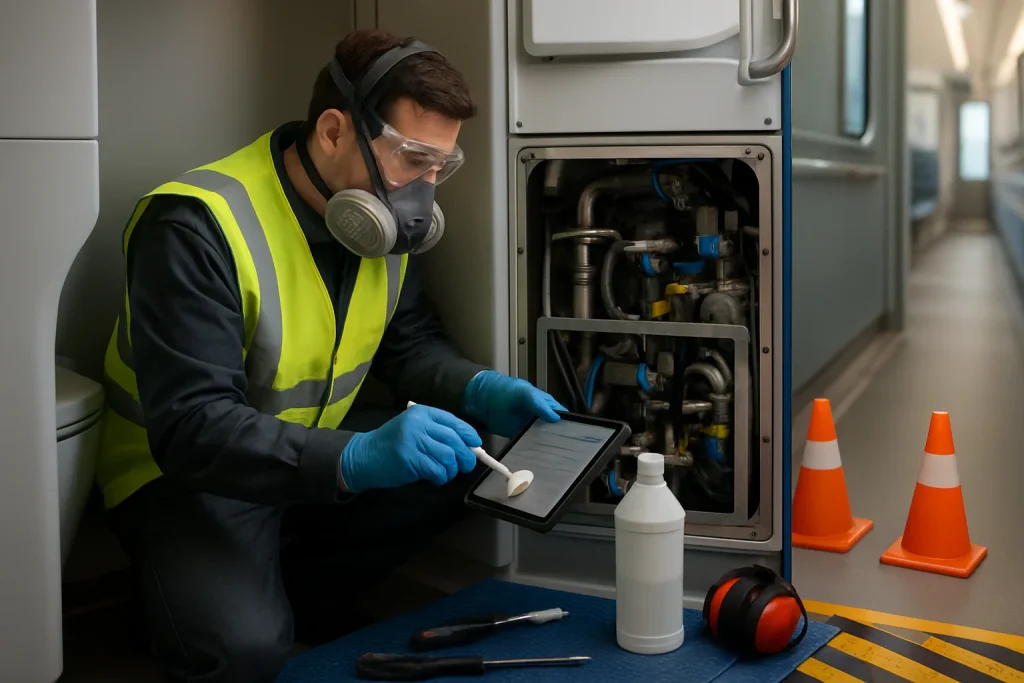
This course provides a systematic and standardised approach to the preventive maintenance and cleaning of Stadler FLIRT DMU vacuum toilet systems. The course covers system operation and design, practical cleaning and descaling methods, disinfection, safety requirements and quality assurance documentation. The focus is on practical, binding work instructions and compliance (including manufacturer’s instructions such as SEMVAC and applicable standards EN 15380-2, EN 13306).
The topics covered in the course are designed to ensure that maintenance staff are able to:
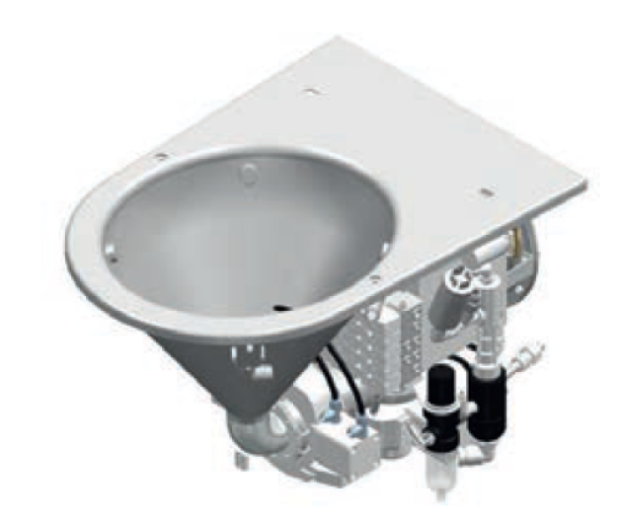
- understand the principle of vacuum WC operation and the importance of the components involved for safe and reliable use,
- carry out preventive cleaning and descaling with appropriate equipment and chemicals (e.g. acid-based descalers, 10% citric acid as an example) and choose the right disinfection methods to reduce microbiological risk,
- comply with personal protective equipment (PPE) requirements and workplace safety principles relating to sewage and infection risks,
- document the actions taken and deviations so that maintenance activities are traceable and auditable,
- react to abnormal situations and apply corrective measures in case of failure.
Target group
The course is intended for maintenance and service personnel, site managers, quality and safety managers and others responsible for the maintenance and compliance of train sanitation systems.
Requirements and recommendations
Participants should have a basic knowledge of rolling stock maintenance, valid training in occupational safety and chemical safety. Participants in practical exercises must have appropriate PPE and approved access to maintenance facilities.
Learning objectives (summary)
On completion of the course, the participant will be able to describe the key features of a vacuum toilet system, select and use the correct cleaning and disinfection methods, apply descaling practices, and prepare and maintain documentation and a maintenance programme that meets manufacturer and standard requirements. The course will also provide concrete recommendations on maintenance intervals (e.g. 160 days as an example) and procedures for emergency situations.
Course structure and assessment
The course is modular, combining theory, practical demonstration and checklist-based exercises. The assessment is based on a data test and an acceptable documentation/practice checklist. Upon successful completion, the participant will receive a certificate of completion.
Safety and Binding
The manufacturer’s service instructions (e.g. SEMVAC) and applicable standards are binding. When selecting chemicals and work methods, always follow the chemical Material Safety Data Sheets (MSDS) and the organisation’s work and environmental guidelines. Safety, security and minimising environmental impact are the primary objectives for all measures.
Get started now – the course provides clear, practical and standardised procedures to ensure safe, reliable and economical maintenance of vacuum toilet systems in Stadler FLIRT DMUs.
Course Content
About Instructor

Course Includes
- 3 Lessons
- 9 Topics

