


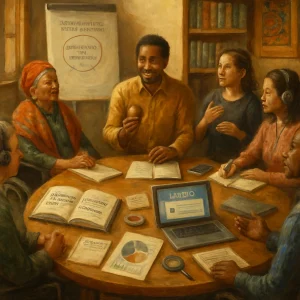
This lesson examines methodological approaches and practical tools for designing, facilitating, and researching intercultural dialogue. Grounded in UNESCO’s definition of intercultural dialogue as an equitable exchange founded on mutual understanding, respect, and the equal dignity of all cultures, the lesson bridges theory and practice. It draws on the scholarship and practitioner experience represented within the UNITWIN/IDIU Network and the bilingual volume Interculturalism at the Crossroads, and makes sustained use of the UNESCO e‑Platform as a repository of publications, searchable bibliography entries, and best‑practice case studies.
Participants will engage with a range of dialogic and participatory methods, learn core facilitation skills for inclusive and accessible encounters, and apply conflict‑sensitive and safeguarding practices to protect vulnerable participants and contexts. The lesson emphasizes rigorous research design and evaluation approaches appropriate to intercultural settings, including mixed methods, participatory action research, and ethically informed monitoring and evaluation frameworks. Practical exemplars and case studies from the e‑Platform and the resources maintained by the UNESCO Chair for Cultural Diversity and Social Justice at Deakin University will be used to illustrate how these methodologies operate in diverse real‑world settings.
We acknowledge the Traditional Custodians of the unceded lands and waterways on which Deakin University operates and pay deep respect to their Ancestors and Elders. Participants are expected to integrate recognition of Indigenous rights, local knowledge systems, and culturally appropriate protocols into the design and facilitation of intercultural dialogue activities.
Lesson topics
- Dialogic Methods and Facilitation Skills — Core principles of dialogic practice; designing inclusive processes; facilitation techniques that promote equitable participation and linguistic accessibility; tools for managing power differentials and ensuring representative voice.
- Research Methods and Evaluation — Research designs suitable for intercultural contexts (qualitative, quantitative, and mixed methods); participatory action research; culturally responsive data collection; ethical review, indicators of impact, and approaches to monitoring and evaluation.
- Conflict Sensitivity and Safeguarding — Conflict analysis and risk assessment tools; do‑no‑harm principles; safeguarding policies and procedures; de‑escalation and referral pathways; practitioner self‑care and organisational responsibilities.
Intended learning outcomes
By the end of this lesson participants will be able to:
- Select and justify dialogic methods suited to particular intercultural objectives and participant groups.
- Apply facilitation techniques that foster respectful, inclusive, and equitable dialogue.
- Design ethically robust research and evaluation strategies tailored to intercultural settings.
- Identify and implement conflict‑sensitive measures and safeguarding practices to mitigate harm and protect participants.
Recommended preparatory materials
- Selected chapters from Interculturalism at the Crossroads (English/French).
- Curated case studies and methodological guides on the UNESCO e‑Platform on Intercultural Dialogue.
- Relevant entries and bibliographic references from the UNESCO Chair for Cultural Diversity and Social Justice (Deakin University).
Students are encouraged to review the above resources before engaging in practical exercises and case analyses within the lesson.
