

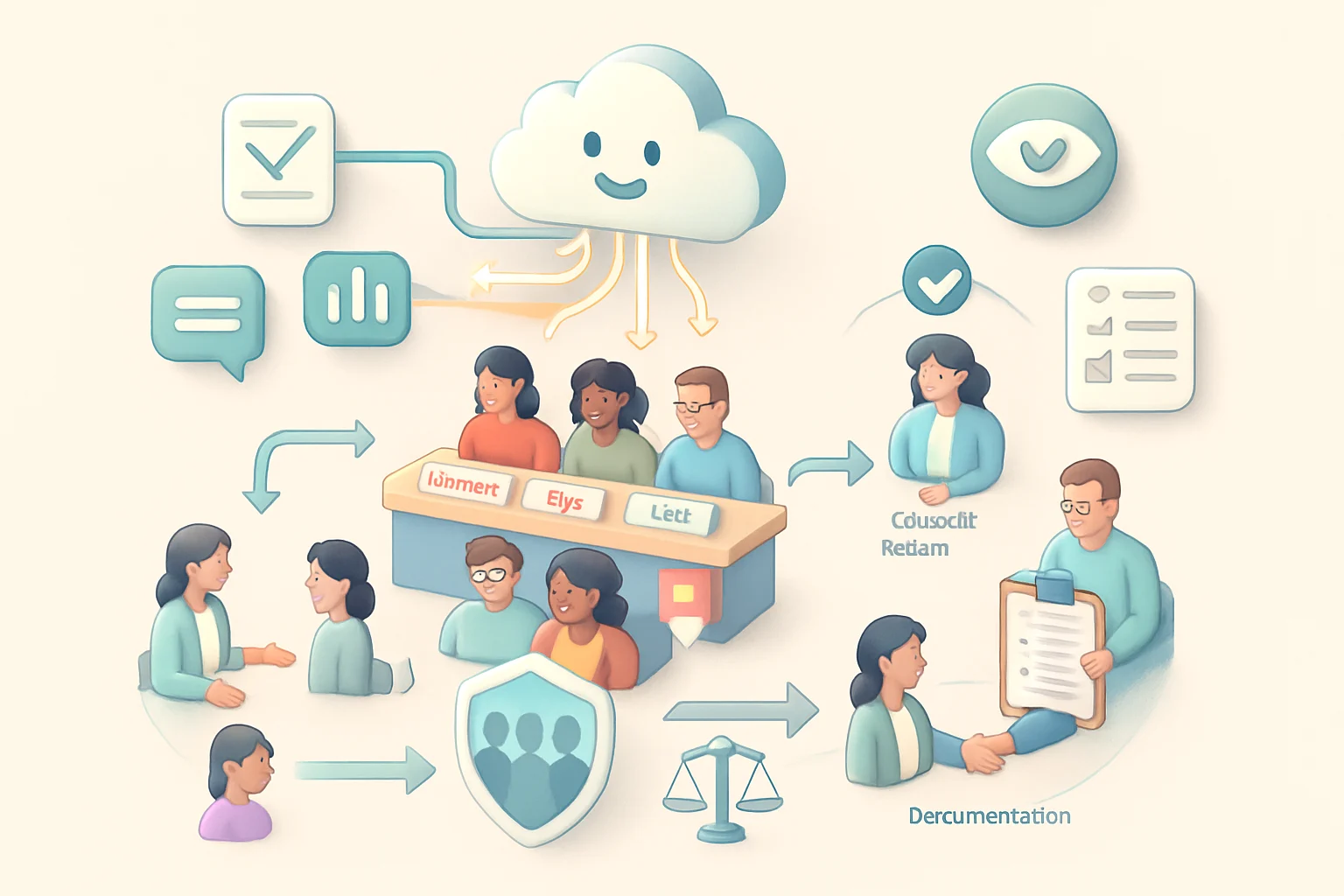
Responsible AI for Healthy and Thriving Learners — Principles, Practice and Policy
A practical, learner-centered short course for educators, designers and policy makers that connects responsible AI principles to real classroom and product choices affecting young people’s health, sexuality education, social-emotional learning and overall well‑being. Mixes ethics, regulation, design practice and hands-on activities so you can assess, adapt and implement tools safely and inclusively.

This course was done during the workshop from the material shared on the UNESCO platform. Just remember, this is just an example of how AI can be helpful in creating training material alongside human input, directly integrated into the LMS system.
Welcome — and excellent choice. This short course connects high-level ideas about responsible AI to the everyday choices that teachers, designers, and policymakers make regarding young people’s health, sexuality education, social-emotional learning, and overall well-being. It’s practical, learner-centered, and designed to help you walk away with concrete skills, checklists, and conversation starters — not just theory.
Who this course is for
- Educators designing lessons or selecting classroom tools
- Instructional designers and ed‑tech product teams
- School leaders and policy makers who set rules and procurement priorities
- Youth workers, counselors, and others who help young people navigate digital services
What you’ll get out of it
By the end of the course you’ll be able to:
- Translate responsible AI principles into real decisions about tools, content and services for young people
- Identify when an AI-powered product crosses from educational support into health advice or services and what that boundary means in practice
- Assess risks to privacy, safety, equity and emotional well‑being, and choose mitigations that are feasible in classrooms and products
- Design or adapt learning activities and policies that center inclusion, consent and age‑appropriate care
- Communicate policy recommendations and procurement criteria in clear, implementable terms
How the course is structured
There are 5 short lessons. Each lesson contains a few topics, practical activities, and templates or checklists you can reuse.
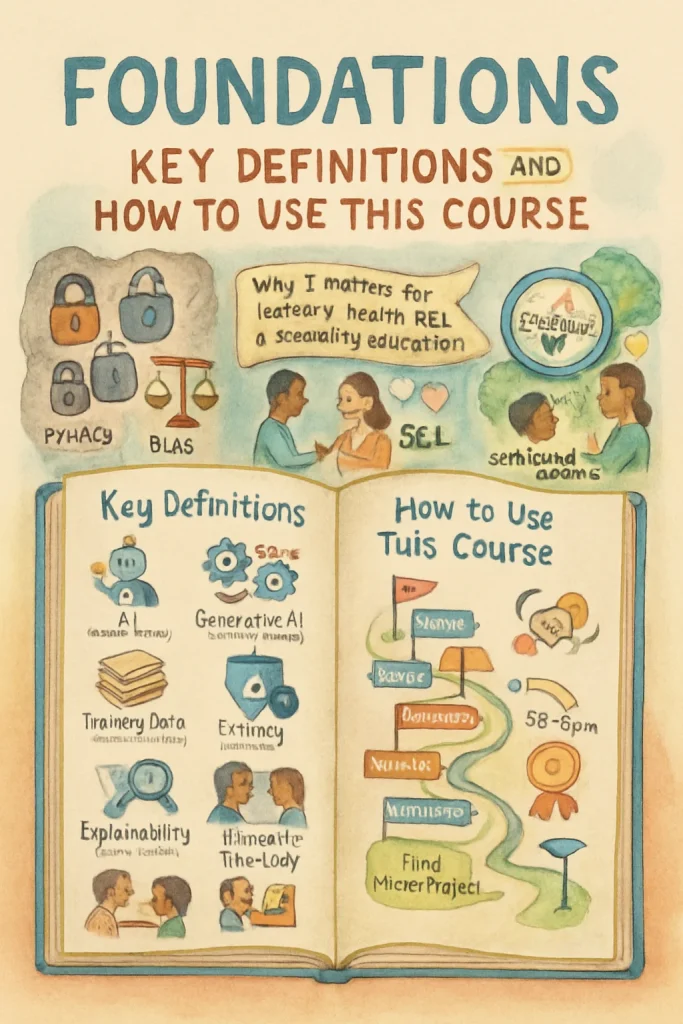
Foundations: Key Definitions and How to Use This Course
- Clarifies terms (AI, ML, chatbot, adaptive learning, clinical vs. educational guidance)
- Explains course flow, how to approach the activities, and suggested pacing
Responsible AI Innovation for Young People and Educators
- Responsible AI principles translated for education contexts (fairness, transparency, accountability, privacy, human oversight)
- Design practices for inclusive, learner‑centered tools
Navigating the Boundary: Educational AI vs. Health Services
- How and when educational tools become health or clinical services (sexuality education, mental health support)
- Legal, ethical and operational implications — and simple decision trees to guide you
AI’s Impacts on Young People’s Well‑Being
- Emotional, social and developmental effects of AI interactions (bias, stereotyping, emotional dependence, misinformation)
- Classroom strategies to support resilience, digital literacy and safety
Policy, Principles and Practical Implementation
- Translating principles into policy, procurement criteria, and staff training
- Implementation checklist, monitoring indicators, and sample communications for families and stakeholders
Course approach — practical and participatory
- Short readings and short videos to introduce ideas
- Hands‑on activities: risk assessments, scenario planning, rubric scoring, and a mini‑policy draft
- Templates and checklists you can apply immediately (tool audit, consent scripts, classroom guidelines)
- Reflection prompts and optional peer discussion activities so you can compare choices with colleagues
Time commitment and prerequisites
- Estimated total time: 4–7 hours (flexible — complete at your own pace). Each lesson is designed to be digestible in 30–90 minutes.
- No deep technical background required. Basic familiarity with common AI examples (chatbots, recommendation systems) is helpful but not necessary.
Sensitive topics and safety
This course will discuss health and sexuality topics because these are central to young people’s well‑being. Content is framed for decision makers — not for direct clinical advice. When applying what you learn:
- Follow local laws, mandatory reporting rules and school/district policies
- Involve clinical professionals when tools cross into health service territory
- Use age‑appropriate language and provide supports for learners who may be affected by sensitive content
How to use the materials
- Follow the lessons in order for a coherent experience, or jump to the lesson you need (e.g., procurement or classroom practice)
- Use the templates as starting points — adapt language to your local context and legal requirements
- Try at least one hands‑on activity in your real context (school, product team meeting, policy review) and bring that example into any peer discussion or reflection
Want to go further?
Each lesson includes curated resources and suggested readings. You’ll find links to legal guidance, design checklists, and exemplar policies you can adapt.
Ready to begin?
Head to Lesson 1: Foundations to get the key definitions, the course roadmap, and your first practical activity: a simple AI tool audit you can do in 10–15 minutes. If you’re coming with a team, consider running that first audit together and using it as the baseline for later lessons.
Let’s do this — practical, careful, and centered on the learners we’re here to support.
Course Content
About Instructor


Course Includes
- 5 Lessons
- 24 Topics
