


The principles underpinning Finnish education reform are deeply rooted in the need for a progressive teaching methodology that responds to the dynamic challenges of modern society. This topic delves into the core tenets that have shaped the evolution of the Finnish educational landscape, particularly emphasizing continuous development and adaptation.
Continuous Curriculum Development
One of the fundamental principles of Finnish educational reform is the continuous and collaborative development of the curriculum. Over the past 30 years, Finnish teachers have actively participated in evolving the educational content, skills, and pedagogical methods. This iterative process culminates in new curriculum versions approximately every five to eight years, ensuring that the curriculum remains relevant and responsive to societal changes.
The impetus for this continuous evolution stems from the necessity to address the challenges posed by a transitioning society—from an industrial framework to one driven by information technology. The curriculum is viewed not as a static document but as a flexible framework that allows for adaptations that meet the current demands of learning and development.
Emphasis on Active Learning
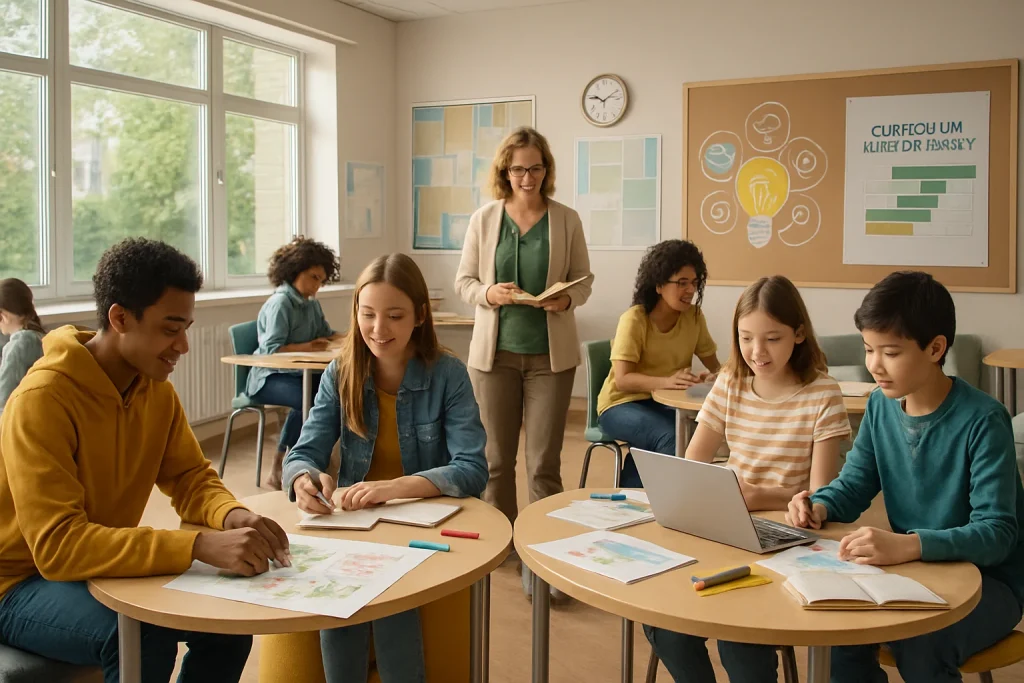
Another principle intrinsic to Finnish education reform is the emphasis on active learning. The approach encourages teachers to foster environments where students are not merely passive recipients of information but active participants in the learning process. This principle supports the development of critical thinking, creativity, and problem-solving skills.
The importance of the student’s voice and individual learning journey is acknowledged, with educators guided to match teaching strategies to the unique needs and interests of their learners. This student-centered philosophy places great value on the learner’s agency and responsibility for their educational choices.
Integration of Transversal Skills
Integrating transversal skills into the curriculum is a hallmark of Finnish education reform. Skills such as collaboration, communication, critical thinking, and creativity are recognized as essential for preparing students for future challenges. The curriculum promotes cross-disciplinary learning experiences that connect various subject areas, reflecting the interconnectedness of knowledge in a rapidly changing world.
For instance, the curriculum facilitates collaborative projects that enable students to apply their learning in practical contexts, encouraging engagement with real-world issues while fostering the ability to navigate complex information landscapes.
Holistic Development
The Finnish educational paradigm prioritizes holistic student development, encompassing not only academic achievement but also promoting mental, physical, and social well-being. This principle resonates with principles outlined in the UN 2030 Agenda for Sustainable Development, which advocates for inclusive and equitable quality education.
Finland’s approach seeks to nurture individuals who are well-rounded citizens, equipped to contribute positively to society. The educational system is designed to support diverse learning paths, integrating cultural identity and promoting gender equality, thereby reinforcing the social fabric of the community.
Flexibility and Personalization
The principle of flexibility in Finnish education reform allows for the personalized learning journeys of students. Individualized education plans can be established, enabling schools to cater to the varying abilities and interests of students. The curriculum encourages the exploration of alternative pathways, further embedding the concept of lifelong learning.
Adaptive teaching methods and ongoing assessment are central to this principle, ensuring that instruction is tailored to meet the evolving needs of students. The result is a learning environment where each student is supported in realizing their potential according to their own capabilities.
Collaborative Curriculum Design
In Finnish education, collaborative curriculum design emphasizes the engagement of teachers, community stakeholders, and educational authorities. This participatory approach fosters a sense of ownership among educators and contributes to a culture of continuous improvement.
Such collaboration facilitates an educational landscape that remains responsive to local and global contexts, thereby preparing students not only for current societal demands but also for future challenges. The principles guiding this reform reflect a commitment to an adaptable and forward-thinking education system that values inclusivity, quality, and relevance.
In conclusion, the principles of Finnish education reform are holistic, dynamic, and grounded in the belief that education must evolve in response to societal changes. By prioritizing continuous development, active learning, transversal skills, holistic growth, flexibility, and collaboration, Finnish education provides a robust foundation for fostering skilled, empathetic, and responsible individuals ready to navigate and contribute positively to the world.
