


Topic: Impact of Social Changes on Education
Introduction
The evolution of education in Finland is intricately linked to the broader social changes that have transpired over the years. As society evolves, so too do the educational practices that shape the experiences of learners. This analysis will explore how shifts in economics, family structures, technological advances, and social values have influenced the Finnish education system, particularly in the context of student-centered learning.
The Interplay of Economic Changes and Education
Economic transformations have profoundly impacted family life and leisure activities, thereby redefining the educational responsibilities of primary schools. In an era characterized by economic fluctuations and demands for adaptability, the primary school’s educational task has become more significant than ever. Educators are now tasked with re-evaluating the conditions that contribute to student well-being, which necessitates a fresh perspective on economic opportunities and the sustainability of our planet.
The Finnish school system has embraced flexibility—evident in varying educational lengths and the recognition of tailored credit systems—allowing for individualized study programs. As a result, schools are increasingly collaborating with other educational institutions and workplaces to cultivate new educational methods that expand the capacity of schools to serve diverse learner needs.
Shifts in Decision-Making and Educational Leadership
Social development has been characterized by a reduction in centralized leadership and a move toward heightened cooperation among educational stakeholders. This has been evidenced in the evolution of decision-making powers that now favor schools and foster greater collaboration within communities. Schools are no longer isolated entities; rather, they are positioned within a network of partnerships that enhance their operational effectiveness and enrich student learning experiences.
Value-Based Education in a Changing Society
At the core of educational reform in Finland is a re-examination of the foundational values that guide teaching practices. With a rapidly changing world, educational institutions must convey values that support individual growth while simultaneously preserving societal cohesion. The Finnish education system is committed to instilling in students the values articulated in the United Nations Universal Declaration of Human Rights, alongside an ethical consideration of sustainable development and inclusivity.
In this context, education serves as a vital platform for students to engage with critical questions concerning identity, morality, and social responsibilities. Enhancements in social skills such as empathy and judgment are emphasized, illustrating the necessity for students to cultivate their capacity for meaningful community engagement and personal well-being.
Theoretical Changes in Curriculum Design
The theoretical underpinnings of curriculum development are also under scrutiny, challenging the traditional ideology of objective learning that has dominated educational practices. Contemporary curriculum theories posit that the curriculum should be viewed as a dynamic process, responsive to environmental changes and educational assessments. Expectations are no longer rigid; instead, they afford educators the freedom to enact curriculum changes that resonate with their school communities and teaching methodologies.
Research underscores the importance of teacher collaboration in the curriculum design process. When teachers are actively involved in developing curricular content, it fosters ownership and commitment to implementation, enhancing educational quality and relevance. This collaborative approach envisions a curriculum as a living entity that continuously adapts to reflect the ever-evolving demands of society.
Shift in Perception of Learning and Knowledge
The current perception of learning emphasizes the active role of students in curating their knowledge. The understanding of learning as a personal and socially interactive process posits that each student enters the classroom with a unique world of experiences, and educational methods should reflect this individuality. Personalized learning pathways grounded in student interests, talents, and challenges are critical for fostering effective learning outcomes.
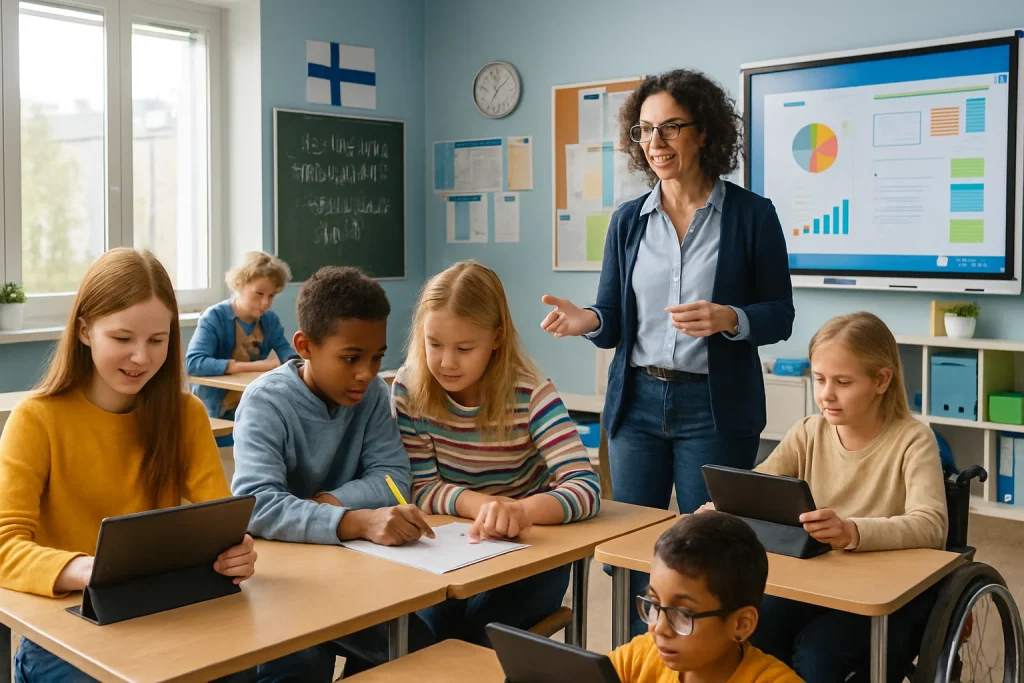
Consequently, education in Finland advocates for flexible learning environments that prioritize the development of critical thinking and problem-solving skills over rote memorization. The teacher’s role has transitioned from merely imparting information to becoming a facilitator of learning who designs enriching educational experiences and stimulates students’ intrinsic motivation.
Conclusion
The impact of social changes on the evolution of education in Finland underscores the necessity for educational reforms that resonate with contemporary societal realities. In promoting student-centered learning, the Finnish education system leverages economic, social, and technological shifts to create a dynamic and responsive educational framework. As Finland navigates the complexities of a changing world, its commitment to continuous curriculum development and the prioritization of student well-being remain central tenets of its educational philosophy. Ultimately, Finnish education exemplifies how adaptability and collaboration can elevate learning experiences and foster a more equitable and inclusive society.
