


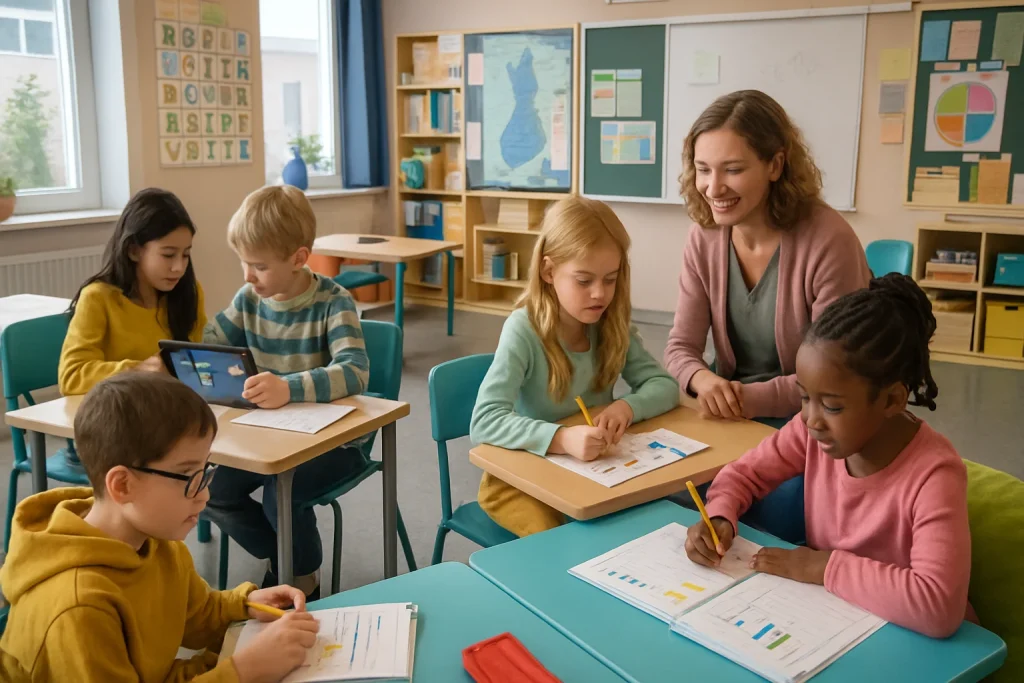
The integration of adaptive teaching methodologies in Finnish schools is crucial to catering to the unique needs of students, fostering an inclusive environment that nurtures individual potential. In Finland, the approach to education is characterized by a commitment to innovativeness and responsiveness, particularly in the context of special education.
Understanding Adaptive Methodologies
Adaptive teaching methodologies are designed to respond dynamically to the varying abilities, learning styles, and challenges faced by students. This flexibility ensures that every student, regardless of their personal circumstances or educational needs, can access meaningful learning experiences that promote their overall growth.
Customized Curricula
In Finnish education, if integration into general classes is deemed ineffective for a student’s development, arrangements are made for teaching in special classes. This includes the development of customized curricula tailored to meet the specific learning needs of students, particularly those with disabilities, developmental delays, or other special requirements. These adapted curricula deviate from general education standards and are crucial for fostering educational growth in special needs students.
The customized approach allows for an individualized assessment of each student’s learning conditions, ensuring that education moves beyond rigid curricula dictated by textbooks. Indeed, there exists a belief encapsulated in the phrase "textbook is not the curriculum." Teachers are encouraged to innovate, prioritize, and focus on the essential knowledge that will foster competence and future readiness rather than merely following prescribed content.
Integration of Special Education
Within Finnish schools, the organization of special education is primarily driven by the idea that every child has the right to succeed according to their own abilities. This means that when a student experiences difficulties learning, adaptive teaching strategies must be employed within the classroom. Collaborative efforts between special education teachers and general education teachers are essential for these adaptations to be effective. In instances where a student requires more intensive support than can be provided in an integrated setting, they may be moved to a special class where individualized instruction can be delivered more effectively.
Supporting Student Initiative and Confidence
A cornerstone of effective adaptive teaching in Finland is the strong emphasis on nurturing students’ initiative and self-confidence. Educators strive to create environments where students feel empowered to participate actively in their learning journeys. This involves:
- Motivation: Teaching begins by highlighting the relevance of the material to students’ lives, making learning relatable and engaging.
- Activation: The methodologies typically incorporate active learning strategies, including group work, peer collaboration, and hands-on projects. This interactive approach is vital in maintaining student engagement and enhances self-directed learning.
- Reflection: Following lessons, teachers facilitate discussions that allow students to reflect upon their learning experiences, encouraging them to articulate their understanding and query any uncertainties.
Learning Environments and Structures
The structure of lessons can significantly influence student participation and focus. In Finnish classrooms, the traditional lecture-based model is being replaced by more interactive frameworks. Lessons are carefully designed to follow a structured approach that includes:
- Introduction: Setting the context and importance of the lesson.
- Core Content: Brief, focused teaching of key concepts and theories.
- Active Learning: Engaging students through collaborative tasks and problem-solving activities.
- Reflection and Assessment: Opportunities for students to discuss and reflect on what they have learned, reinforcing both individual understanding and collective knowledge.
Continuous Evaluation and Adaptation
Adaptive methodologies also rely heavily on continuous evaluation to inform instruction. Teachers are encouraged to regularly assess the progress of their students through formative assessments, which provide insights into areas of strength and those needing further support. This ongoing feedback loop allows for timely adaptations to teaching strategies, ensuring that the educational environment remains responsive to students’ needs.
Conclusion
In summary, the adaptive methodologies embedded within the Finnish education system represent a paradigm shift toward recognizing and nurturing the individuality of each learner. By prioritizing personalized education and fostering a collaborative, reflective, and supportive atmosphere, Finnish educators are effectively preparing students for the complexities of the modern world. The flexibility and responsiveness of these methodologies affirm the belief in the potential of every student to thrive within the educational landscape.
