


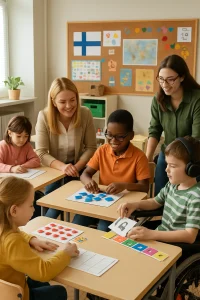
Overview of Special Education in Finland
The Finnish education system is celebrated for its inclusive approach, ensuring that all students receive the support they need to succeed academically and socially. Central to this is the Special Education Framework, which guarantees that students with special needs can complete their compulsory education according to their own conditions while also having opportunities for postgraduate studies.
Legislative and Policy Framework
The foundation of special education in Finland is anchored in various laws and policies that prioritize inclusivity and equity in education. The key legislation includes:
-
The Basic Education Act:
- Mandates that municipalities ensure provision for special education services based on the individual needs of students.
- Requires collaboration among students, guardians, teachers, and specialists in planning, implementing, and evaluating educational arrangements.
-
Curriculum Guidelines:
- Outline the necessity for customized curricula that must be adaptable to meet the varying learning conditions of students with special needs.
- Encourage the integration of special education within general education settings, fostering an environment where students with different abilities learn together whenever feasible.
Arrangement of Special Education
Special educational arrangements are specifically designed to help students complete their compulsory education effectively. Municipalities play a crucial role in:
- Identifying Needs: Determining the special education services required by pupils according to their unique strengths and challenges.
- Providing Resources: Ensuring that the necessary educational and support measures are available to meet these diverse needs.
Part-Time Special Education
For students with mild learning and adjustment difficulties, Finland employs a model of part-time special education. This model allows students to receive individualized support while remaining integrated within general education classrooms.
- Co-Teaching Approach:
- Part-time special education often involves collaboration between general education teachers and special education teachers.
- This co-operative model utilizes diverse educational support measures, creating a rich learning environment that benefits all students.
Integration vs. Special Classes
While integration is preferred for students with less severe difficulties, there are circumstances where it may not be effective for a student’s development. In such cases, the arrangement of teaching may occur in special classes, ensuring that students receive the focused assistance they require.
- Integration Requirements:
- The educational conditions in general education settings must be favorable for the student’s learning.
- Adequate support measures must be in place to facilitate successful integration.
Customized Curricula and Teaching Adaptation
Customization is a hallmark of the special education framework in Finland. The objectives and contents of special education curricula align with those of general education but can be distinctly tailored to support individual students.
- Personalized Learning Goals:
- When discrepancies arise between the approved curriculum and a student’s personal learning goals, priority is given to the latter, ensuring that education is centered around the individual learner.
- Ongoing Assessment:
- The objectives and contents of the curriculum are continually reviewed based on student progress and feedback from assessments, providing a dynamic learning experience.
Key Pedagogical Approaches
The pedagogical strategies employed in Finnish special education emphasize experiential learning, functionality, and playfulness:
-
Child-Centric Focus:
- All teaching practices are rooted in understanding the child’s individuality and unique learning pathways.
- Learning is encouraged through exploration, play, and interaction within a supportive environment.
-
Holistic Development:
- A significant focus is placed on the social, emotional, and cognitive well-being of each student, fostering an overall sense of belonging and community.
Conclusion
The Special Education Framework in Finland exemplifies a comprehensive approach that promotes inclusivity and caters to the diverse needs of students. By ensuring that special educational arrangements are tailored to individual circumstances, the Finnish education system affirms the belief that every child has the right to learn and thrive in a supportive environment.
