


Overview
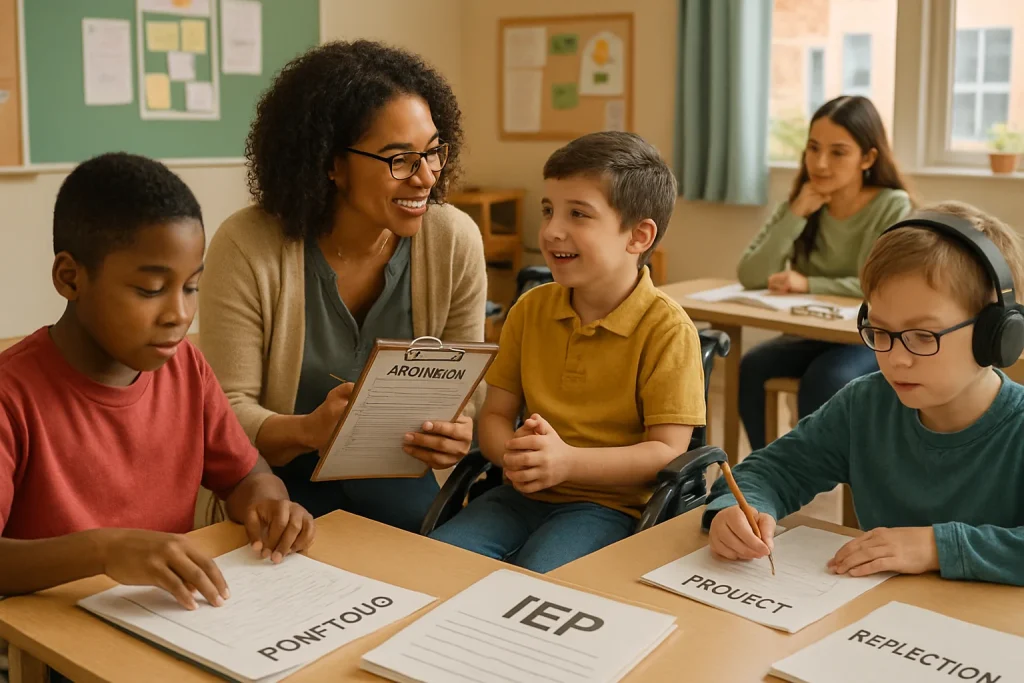
The foundation of effective assessment in special education is to create an inclusive environment that recognizes and addresses the diverse needs of students with special needs. In Finnish education, the teaching approach is characterized by a strong emphasis on student-centered learning, which is particularly important when evaluating students with unique challenges. The assessment should not only measure academic achievement but also foster an understanding of the students’ personal learning progress and instill a sense of confidence and capability within them.
Assessment Strategies
When evaluating the progress of students with special needs, various tailored assessment methods can be employed to capture a holistic view of each student’s abilities and challenges.
1. Formative Assessment
Formative assessments are ongoing evaluations that provide feedback throughout the learning process rather than at the end. This approach is crucial in special education as it allows educators to:
- Gather continuous insights about a student’s understanding and engagement.
- Modify instruction and support according to the student’s immediate needs.
- Use assessments such as observations, quizzes, and interactive activities to gauge comprehension in real-time.
Techniques:
- Observational Assessments: Teachers can observe students during group activities or individual tasks to assess engagement and understanding.
- Checklists and Rating Scales: These tools allow teachers to assess specific skills or behaviors, facilitating targeted support.
2. Summative Assessment
Summative assessments are used to evaluate student learning at the end of an instructional unit by comparing it against some standard or benchmark.
Techniques:
- Portfolios: Compile students’ work over time, showcasing their progress and reflecting their learning journey.
- Exams and Performance Tasks: Tailored tests that consider students’ abilities and learning preferences can provide a comprehensive view of their knowledge.
3. Alternative Assessments
Alternative assessments provide a means to evaluate students’ performance in varied settings outside traditional testing formats. This method is particularly beneficial for students with special needs who may struggle with conventional assessment formats.
Techniques:
- Project-Based Assessments: Allow students to apply skills in real-world scenarios, emphasizing creativity, problem-solving, and teamwork.
- Self-Assessment: Encouraging students to reflect on their own learning can foster independence and self-advocacy.
4. Personalized Learning Goals
In Finnish education, adapting curricula and assessments to meet individual learning conditions is paramount. Each special education student may have a personal curriculum developed based on their strengths and areas for growth.
Technique:
- Individualized Education Programs (IEPs): These documents outline personalized learning goals for students with special needs, ensuring assessments are aligned with their unique objectives and progress.
5. Feedback and Reflection
Assessment in special education must prioritize constructive feedback and opportunities for reflection. This encourages students to understand their learning processes better and fosters a growth mindset.
Techniques:
- Reflection Sessions: After assessments, students should be encouraged to discuss what they learned, what challenges they faced, and how they can improve.
- Feedback Forms: Providing clear, specific feedback helps students understand their strengths and areas needing improvement.
Conclusion
The assessment techniques used in Finnish special education focus on fostering a supportive, engaging, and reflective learning environment. By employing a combination of formative, summative, and alternative assessments, educators can gain a comprehensive understanding of each student’s learning journey. Understanding "why" assessments are carried out, how they relate to real life, and their usefulness in enhancing students’ experiences is crucial for promoting meaningful learning and personal growth among students with special needs.
