


Lesson: The Future of Education: Teacher Training and Professional Development
Topic: Preparing Teachers for Future Challenges
Introduction
In the contemporary educational landscape, the role of the teacher is evolving to meet the dynamic needs of 21st-century learners. As students engage increasingly with digital technologies and navigate a world rich in information, the critical skills required for future success have shifted significantly. This topic delves into the essential skills and pedagogical strategies that teachers must adopt to thrive amidst these changes, reflecting the progressive ethos of Finnish education.
Understanding the 21st Century Learning Environment
Students of the 21st century often operate within technical and virtual environments, where traditional learning paradigms are insufficient. The information they seek is predominantly obtained "Just In Time" (JIT). Therefore, educators must transition from rote memorization of facts to fostering skills that enable students to navigate and critique vast information landscapes. The imperative skills that emerge in this context include:
- Information Processing: The ability to discern credible sources, analyze data, and apply knowledge to real-world scenarios is pivotal.
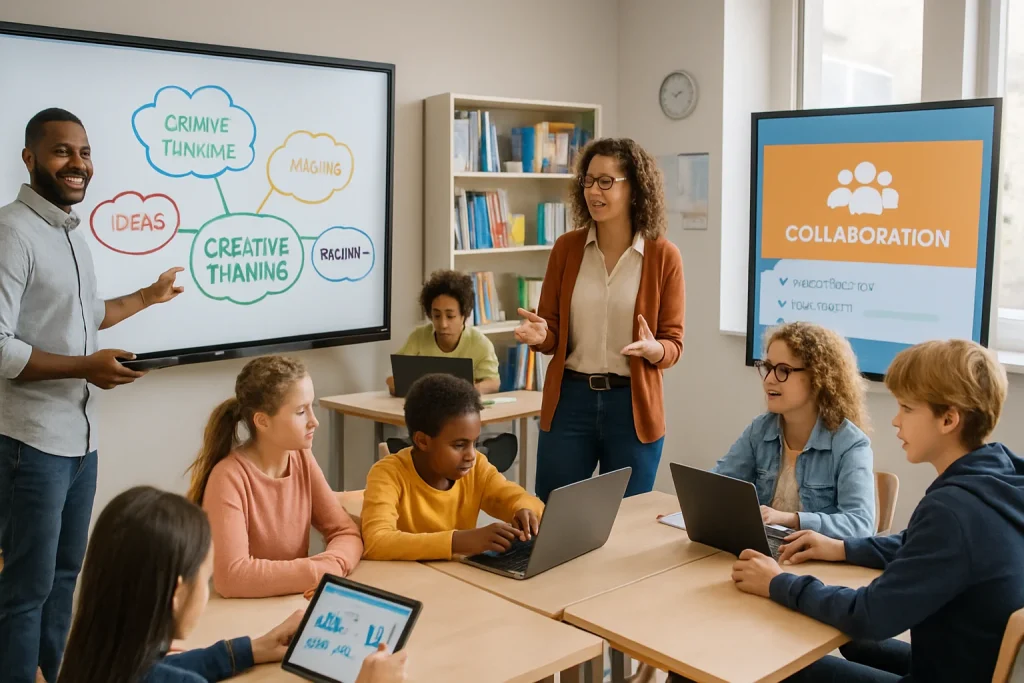
- Creative Thinking: Encouraging students to innovate and approach problems from multiple perspectives enhances their problem-solving capabilities.
- Collaboration: As teamwork increasingly defines professional and personal success, teachers must foster environments that promote cooperative learning.
- Communication: Mastering verbal and written communication skills is essential for students in conveying their ideas effectively across diverse platforms.
The Concept of "Cutting the Content"
One of the foundational strategies for equipping teachers with the requisite skills is the principle of "Cut the Content." This requires educators to critically assess the relevance of traditional textbooks and curricular materials. The Finnish education system emphasizes that "Textbook is not the Curriculum;" hence, teachers must curate lesson content by addressing three fundamental questions:
-
WHAT?
- Identify the core knowledge and learning outcomes from the curriculum.
-
WHY?
- Determine the value and significance of the content in relation to student success and future career paths. If the information is deemed irrelevant, it may be excluded.
-
HOW?
- Innovate and strategize methods to deliver the content that engages students, activates their learning, and ties lessons to real-life applications.
This approach requires educators to exemplify flexibility and critical thought in lesson planning, which can be further enhanced through ongoing professional development.
New Challenges in Lesson Planning
Research illustrates that traditional lecture-based teaching methods are increasingly ineffective. With attention spans shortening—only 14% of students can focus on lectures that exceed 15 minutes—educators need to restructure lessons to foster motivation and active engagement. The following elements should be integrated into lesson planning:
- Motivation: Begin with compelling narratives or real-life scenarios that highlight the relevance of the lesson content.
- Summary of Teaching Content: Deliver concise, focused instruction that introduces key concepts within a 10-minute timeframe.
- Student Activation: Emphasize active learning modalities, such as group work, discussions, and hands-on activities that encourage student participation and inquiry.
- Reflection: Facilitate opportunities for students to share their thoughts and experiences related to the lesson, promoting both self-assessment and learning consolidation.
- Repetitive Reinforcement: Conclude with a key takeaway that encapsulates the main learning points to support memory retention.
Continuous Curriculum Development
The Finnish educational ethos advocates for the continuous evolution of the curriculum, which allows for adaption in response to societal changes and emerging educational research. This dynamic shift necessitates an ongoing commitment to professional growth among educators. Teachers must engage in regular self-evaluation and collaborate with peers to adapt instructional strategies and curricular content to include modern competencies.
This collective effort nurtures an inclusive educational environment that prepares students for future challenges. The future of education hinges on teachers not merely as disseminators of information, but as mentors who cultivate curiosity, critical thinking, and a love for lifelong learning.
Conclusion
Equipping teachers with the tools to navigate the future of education underscores the necessity for adaptable and innovative teaching approaches. As educators embrace a student-centered framework reflective of Finnish values, they empower their students to thrive in a rapidly evolving world. Emphasizing critical skills over mere content mastery will produce learners who are engaged, informed, and ready to tackle the complexities of modern society.
