


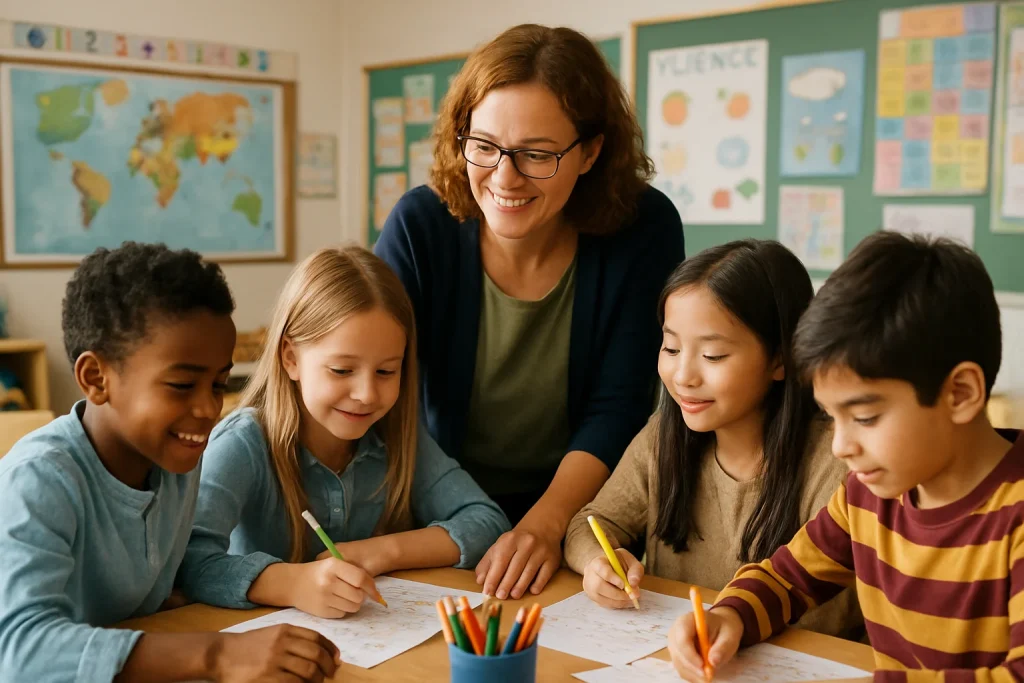
In this lesson, we will delve into the essential role of educators within the framework of student-centered learning, inspired by the Finnish education model. The transition from traditional teaching methodologies to a facilitator approach emphasizes the importance of nurturing environments where students engage actively in their learning process. As facilitators, teachers are not merely transmitters of knowledge; rather, they are guides who create opportunities for meaningful exploration and critical engagement.
Now, we will discuss the four critical topics that shape the understanding and practices of teachers as facilitators:
Topic 1: Teacher Autonomy and Professional Development
This topic will explore the significance of granting teachers autonomy in their teaching practices, leading to enhanced professional development. Emphasizing teacher empowerment allows educators to innovate and adapt their methodologies to suit the diverse needs of their students. We will examine how fostering an environment of continuous professional growth can lead to improved outcomes for both teachers and students.
Topic 2: Facilitation vs. Traditional Teaching
In this section, we will draw a clear distinction between facilitative teaching methods and traditional pedagogical approaches. Traditional teaching often relies on rote memorization and passive learning, while facilitative approaches prioritize interaction, collaboration, and student engagement. Participants will analyze various strategies employed in the Finnish education system and reflect on how these practices can be integrated into their own teaching.
Topic 3: Building Trust and Relationships in the Classroom
The creation of a supportive and trusting classroom environment is crucial for effective facilitation. This topic will address the foundational role of trust in the teacher-student relationship and how it affects student engagement and learning effectiveness. We will explore strategies for cultivating meaningful relationships with students, which is essential for creating a safe space where learners feel valued and empowered to take risks in their learning.
Topic 4: Collaboration among Educators
Lastly, we will discuss the importance of collaboration among educators in the context of student-centered learning. Collaboration not only enhances professional learning but also fosters a community of practice where teachers can share insights and strategies. We will examine successful models of collaborative practices within the Finnish educational framework and discuss how such approaches can be implemented to support collective growth and improve student outcomes.
Through this lesson, participants will gain a comprehensive understanding of the multifaceted role of teachers as facilitators of learning, ultimately leading to enhanced educational experiences for their students.
