


Lesson: Promoting Well-Being and Inclusion in Education
Topic: Social Responsibility and Civil Engagement
The Finnish education system places an immense emphasis on nurturing social responsibility and civil engagement among students. As societal norms and economic conditions evolve, it is imperative for educational institutions to reassess their roles in fostering well-being. This entails configuring the curriculum in a manner that instills a sense of agency, ethical awareness, and civic responsibility in students, thereby preparing them to engage with an increasingly interconnected world.
The Evolving Educational Context
Recent changes in the economic landscape have necessitated a re-evaluation of family dynamics and leisure activities, thus redefining the educational objectives of primary schooling. Educational curricula are adapting to modern challenges, emphasizing opportunities that promote well-being through innovative teaching practices. Specifically, the Finnish school system seeks to develop students’ individualized study programs that are conducive to their unique learning needs, achieved in conjunction with external institutions and workplaces.
This flexible approach aims to enhance the school’s service capabilities by fostering collaborative relationships within the community and beyond. Through the reduction of hierarchical leadership, schools are encouraged to actively engage in networked activities, increasing their influence within the local and broader educational ecosystem.
Curriculum Design and Its Role in Promoting Social Responsibility
The Finnish curriculum emphasizes values that promote individual growth while simultaneously nurturing societal cohesion. Education is positioned as a means of transmitting essential social values that encourage students to be engaged, critical, and responsible members of society. This requires an ethical review of teaching methods, rooted in the foundational principles of the United Nations Universal Declaration of Human Rights.
In this context, the curriculum facilitates discussions on sustainability, cultural identity, and international cooperation, providing students with a framework to understand their responsibilities as citizens. As classrooms become increasingly multicultural, the imperative for students to engage with diverse cultural backgrounds fosters tolerance and empathy, key attributes for social interaction and collaboration.
Enhancing Social Skills and Community Engagement
Effective education is characterized by a strong emphasis on social skills, such as judgement and empathy, which are integral to the vitality and sustainability of communities. The promotion of health and well-being is inseparable from students’ social development, which is fostered through active participation in civil society. By examining real-world issues and opportunities for involvement, students are encouraged to express their views and influence the decision-making processes of their communities.
Participatory learning models enable students to:
- Acquire Knowledge: Gain insights into societal structures, their functions, and the roles individuals play within them.
- Develop Critical Thinking: Analyze contemporary issues, consider diverse perspectives, and evaluate the implications of civic engagement.
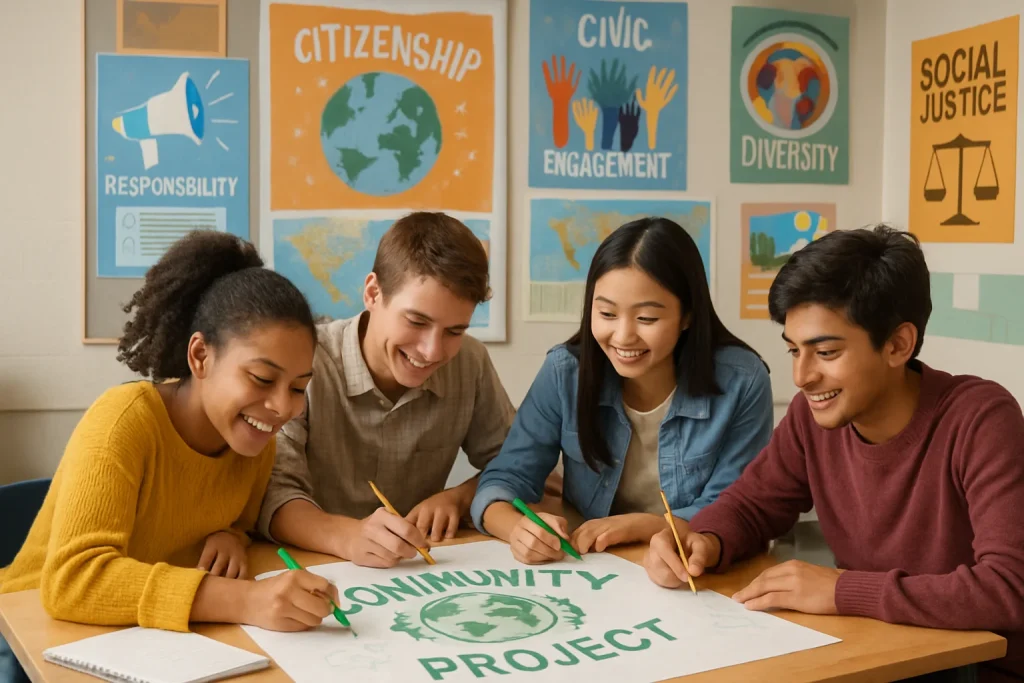
- Practice Active Citizenship: Engage in community projects, collaborative initiatives, and volunteer opportunities that reinforce their commitment to social responsibility.
Each of these components is designed to enhance students’ understanding of their responsibilities as citizens, thus preparing them to navigate and improve their environments proactively.
Conclusion
In an ever-evolving global landscape, the ability for students to understand and engage with complex societal challenges is critical. The Finnish educational model recognizes the importance of equipping students with the skills necessary for responsible citizenship and community involvement. By fostering social responsibility and civil engagement within the curriculum, educators can significantly contribute to the cultivation of well-rounded individuals who are prepared to make a positive impact not only in their immediate environments but also on a global scale.
This transformative approach to education emphasizes the necessity for continual reflection and adaptation, ensuring that the teaching methods and curricula remain relevant to the changing dynamics of society.
