


Introduction
In this lesson, we delve into the significant role that well-being and inclusion play within the Finnish educational landscape. Recognized globally for its innovative and student-centered approach, the Finnish education system emphasizes not only academic proficiency but also the holistic development of children. This lesson is structured around four key topics that assert the importance of nurturing the physical, mental, and social well-being of students, thus creating enriching and inclusive educational environments.
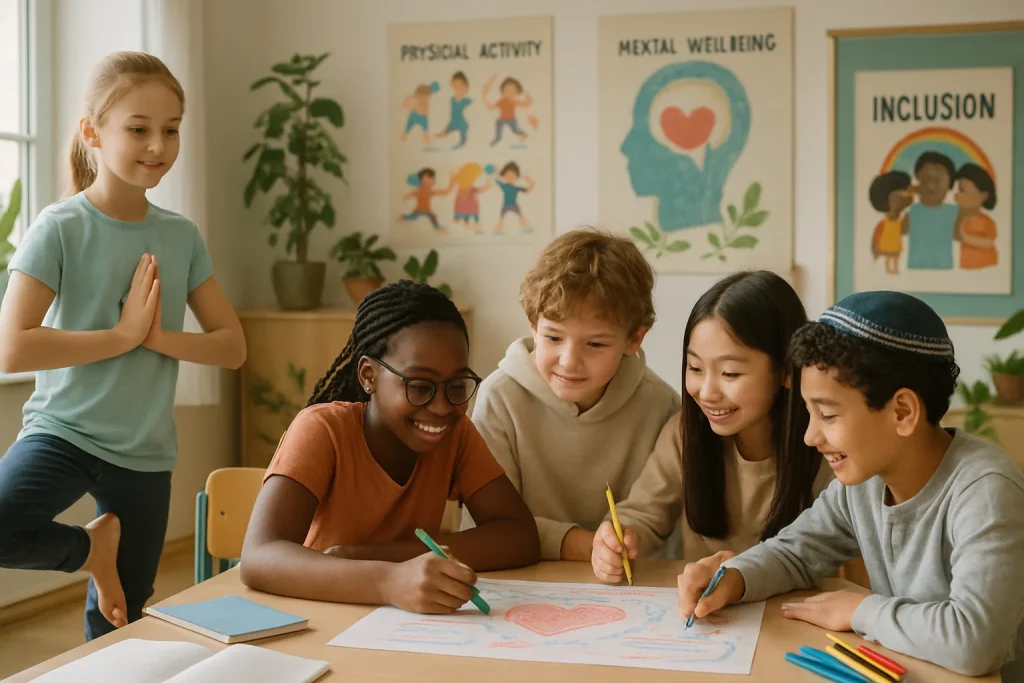
The first topic, Physical and Mental Well-Being, underscores how balanced health contributes to effective learning and overall life satisfaction. Emphasis is placed on cultivating a positive school climate that promotes physical activity and mental health support, ensuring that students are equipped to excel both inside and outside the classroom.
Following this, we explore Cultural Identity and Multiculturalism. Finland’s diverse society increasingly comprises students from various linguistic and cultural backgrounds. This section will address the importance of fostering an inclusive educational setting that values and respects cultural identities, thereby allowing students to grow into empathetic and understanding individuals.
Next, we discuss Social Responsibility and Civil Engagement. We highlight how education empowers students to become active, informed citizens that contribute positively to their communities. By encouraging civic participation and social responsibility, Finnish education prepares students to navigate and influence the world around them.
Lastly, we focus on Inclusive Educational Practices. This topic highlights how the principles of inclusion shape educational policies and teaching methodologies that cater to the diverse needs of all learners. We will examine how individualized education strategies and collaborative classroom environments not only enhance learning outcomes but also promote equity and access.
In summary, this lesson advocates for a comprehensive understanding of well-being and inclusion as foundational elements of the Finnish educational philosophy. An exploration of these topics will provide valuable insights into developing inclusive practices that prioritize the overall well-being of students in various educational contexts.
