


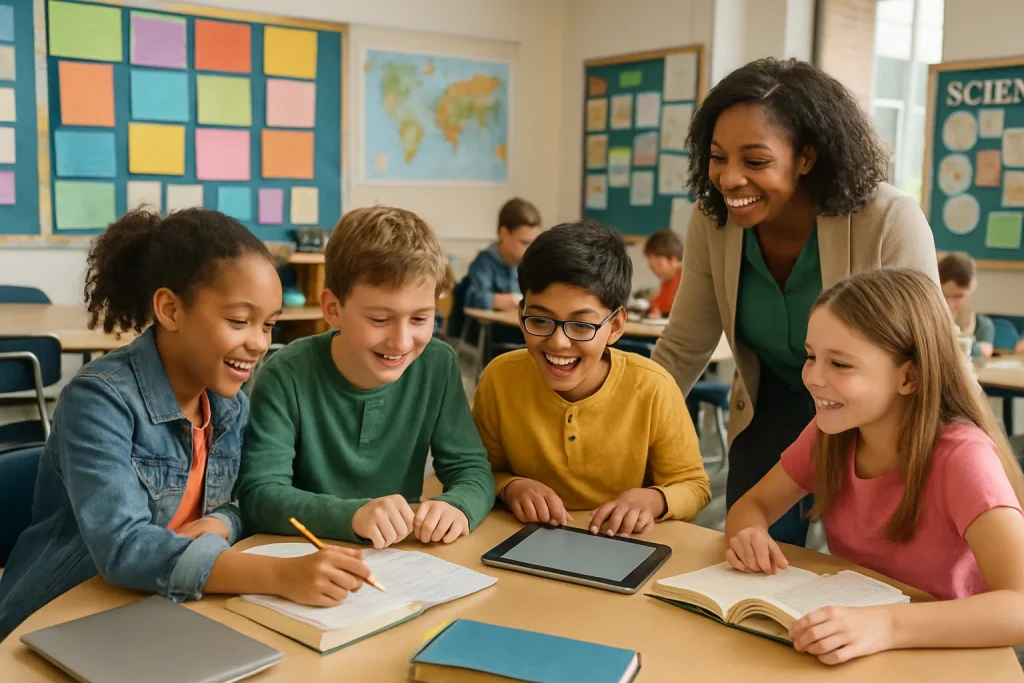
In the realm of contemporary education, the significance of student-centered learning cannot be overstated. This lesson is dedicated to exploring the pivotal role of placing students at the forefront of the learning experience. Embracing a student-centered approach not only engages learners more effectively but also cultivates an environment conducive to critical thinking and creativity.
This lesson is structured around four key topics, aimed at equipping educators with the knowledge and strategies necessary to implement student-centered learning principles effectively:
-
Understanding Student-Centered Learning: Here, we will elucidate the foundational concepts of student-centered learning, highlighting its core principles and benefits in the context of Finnish educational practices.
-
Strategies for Enhancing Engagement: This topic will delve into practical strategies that educators can employ to actively engage students in their learning journey, fostering an intrinsic motivation to learn.
-
Nurturing Critical Thinking Skills: We will examine methodologies to encourage students to think critically and creatively, empowering them to take charge of their learning and develop into independent thinkers.
-
Role of Teachers in Student-Centered Approaches: The final topic will focus on the evolving role of teachers within a student-centered framework, emphasizing their position as facilitators and mentors rather than traditional conveyors of knowledge.
The context of effective teaching necessitates a shift from passive absorption of information to an interactive and dynamic learning process. This lesson will underscore the importance of motivating students by making the relevance of each lesson clear. By addressing fundamental queries—WHY the lesson is significant, HOW it relates to real-life scenarios, and WHAT skills and knowledge can be gained—we can enhance student motivation.
Through storytelling, real-life examples, and varied multimedia resources, we will explore how to create engaging learning environments. Moreover, we will discuss techniques for summarizing content effectively, activating student participation through collaborative tasks, and encouraging reflective practices that invite student feedback and inquiries.
Ultimately, the goal of this lesson is to empower educators to foster meaningful interactions within diverse learning contexts, ensuring that every student feels valued and capable of achieving academic success. Let us embark on this exploration of how to cultivate a student-centered classroom, inspired by the successful and innovative education system in Finland.
