


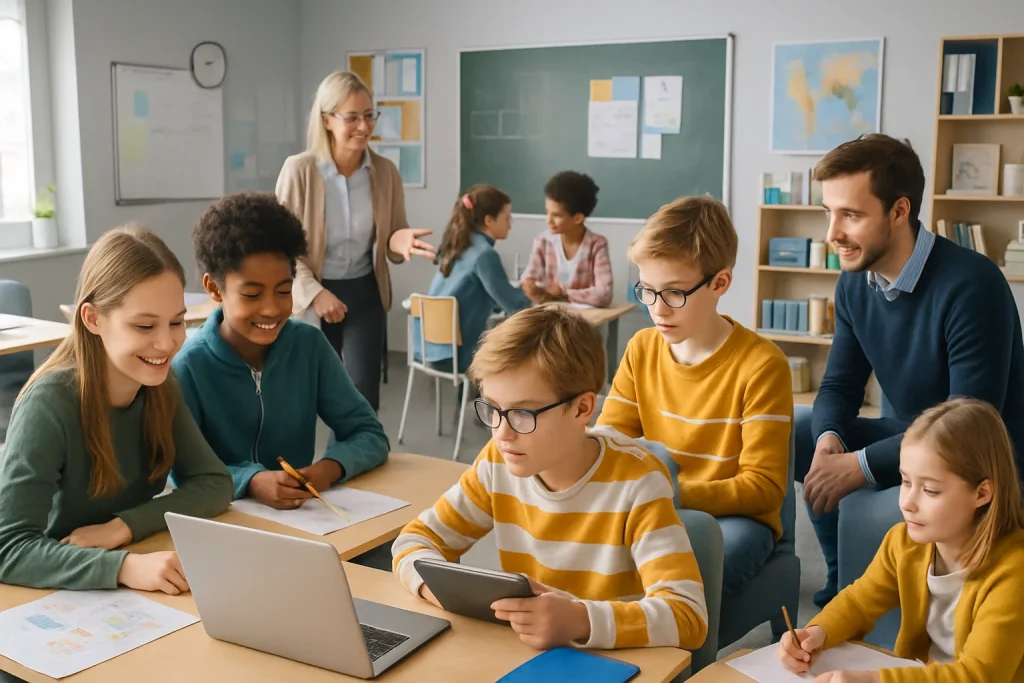
The evolution of educational methodologies within the Finnish system has led to the adoption of innovative curricular strategies aimed at enhancing student engagement and fostering more meaningful learning experiences. The following discussion highlights several key strategies integral to this transformation.
Emphasis on Social Skills and Emotional Intelligence
A pivotal element of the Finnish curriculum reform is the increased focus on social skills, including judgment and empathy. The contemporary understanding of education posits that learning is not merely the acquisition of factual knowledge but also the development of interpersonal skills that enhance community vitality and individual well-being. This paradigm shift underscores the importance of integrating emotional intelligence into the curriculum, ensuring that students develop the capacity for empathy, collaboration, and critical thinking as foundational elements of their education.
Viewing Curriculum as a Dynamic Process
Finland’s approach to curriculum emphasizes its dynamic nature, which continually adapts in response to learning outcomes and environmental changes. Current curricular theories advocate for an iterative process over a static ideology of objective learning. This methodology encourages educators to view the curriculum as a flexible framework that allows for continual refining based on assessment results, feedback, and the evolving needs of society. Flexibility in curriculum design empowers educators to make informed changes that promote relevance and engagement.
Teacher Equity in Curriculum Development
Research indicates that the genuine involvement of teachers in curriculum development is essential for effective implementation and lasting change. When teachers partake in designing the curriculum, it cultivates a sense of ownership and commitment, ensuring the contents resonate with their educational philosophies and the realities of their classroom environments. This participatory approach fosters a collaborative culture where teachers can contribute their insights, enhancing the curriculum’s practical application and relevance to student needs.
Individualized Learning Pathways
Recognizing each student’s unique background and experiences necessitates the creation of individualized learning pathways. In the Finnish education system, differentiation is central to meeting diverse learning needs. Curricula are structured to incorporate tailored learning programs based on students’ talents, interests, and challenges. This customization ensures that education is student-centered, with learning experiences that are engaging, relevant, and meaningful to each student.
Active Learning Through Engagement Strategies
To sustain attention in increasingly distracting environments, innovative curricular strategies prioritize active learning methodologies. Traditional lecture formats have shifted towards interactive teaching techniques that actively engage students. Effective strategies may include collaborative projects, peer-to-peer learning, and problem-solving tasks that extend beyond rote memorization.
Furthermore, student activation is facilitated through questioning, discussions, and hands-on activities that promote exploration, curiosity, and a deeper understanding of the content. A typical lesson may be structured to begin with motivation, followed by content delivery, active engagement, reflection, reiteration, and culminated in applied homework. Such structured yet flexible lessons reinforce sustained engagement and connect learning to real-life applications.
Cutting Content to Focus on Key Concepts
As educational content expands rapidly, educators face the challenge of effectively prioritizing content to align with the skills necessary for the 21st century. The Finnish model advocates for a "cut the content" approach, which encourages educators to distill curricular materials to their most critical elements. Educators are prompted to ask themselves three fundamental questions when planning lessons:
- WHAT? Identify essential learning outcomes and highlight critical concepts.
- WHY? Clarify the relevance of the content to students’ lives and future skills.
- HOW? Design engaging learning experiences that activate students’ prior knowledge and connect the content to real-world situations.
By focusing on these guiding questions, teachers can create a more streamlined and impactful curriculum that emphasizes the mastery of key skills over the quantity of content.
Addressing 21st Century Skills
Equipping students with the critical skills needed for the future is central to Finnish educational reform. In addition to foundational knowledge, emphasis is placed on fostering competencies such as creativity, collaboration, communication, and adaptability—skills deemed essential in a rapidly changing technological landscape. This encompasses approaches that integrate technology into the curriculum, encouraging students to become proficient and responsible users of digital tools.
Conclusion
The adoption of these innovative curricular strategies reflects a profound commitment by the Finnish education system to place students at the center of the learning process. By emphasizing social skills, fostering active engagement, adapting to individual needs, and refining core content, educators are better positioned to prepare learners not only for academic success but also for vibrant citizenship within a dynamic global society. Through these efforts, the Finnish educational model exemplifies a forward-thinking approach to education that prioritizes meaningful learning experiences.
