


Overview
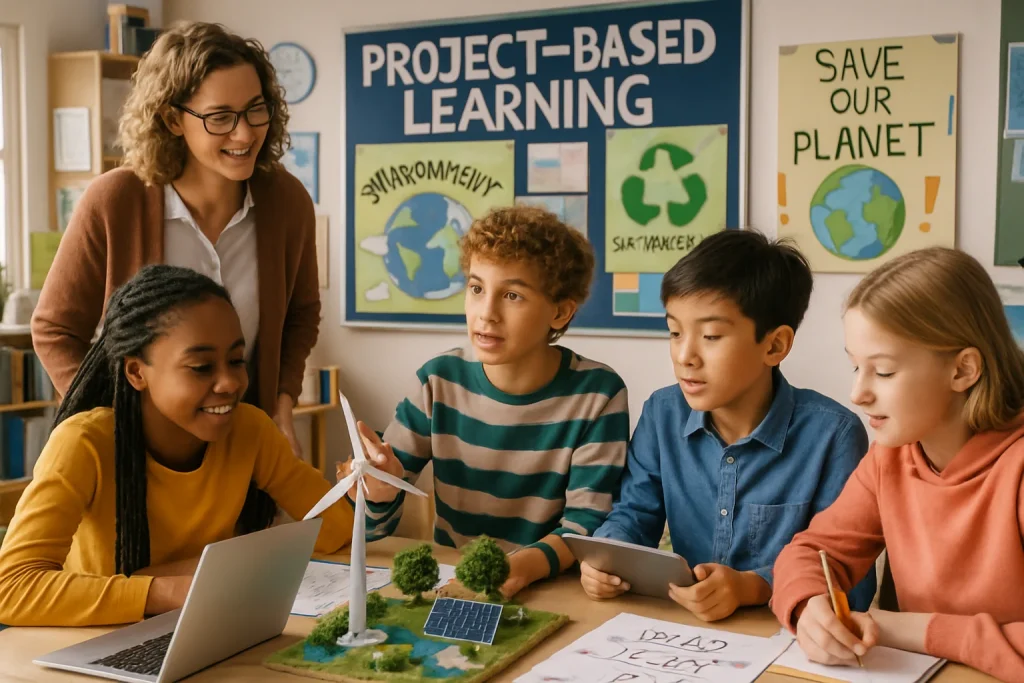
Project-Based Learning (PBL) serves as a transformative pedagogical approach, providing significant advantages over traditional textbook learning. PBL encourages active engagement from students, fostering skills that are essential for success in the 21st century. As educators, it is vital to explore the nuances of this learning strategy and its alignment with Finland’s educational philosophy, which emphasizes student-centered learning and the development of essential real-life skills.
Contextual Background
In the 21st-century educational landscape, schoolchildren are immersed in a technical-virtual environment that necessitates the acquisition of real-life skills—skills that are often termed "Just In Time" (JIT). In this digital age, information is readily accessible through platforms like Google, which shifts the emphasis from rote memorization to critical thinking and practical application of knowledge.
The Shift to Real-Life Skills
Students now require skills such as:
- Creative Thinking: The ability to conceptualize ideas uniquely and innovatively.
- Collaboration: Working effectively within diverse teams to achieve common goals.
- Communication: Conveying information clearly and persuasively in various contexts.
- Creativity: The capacity to produce original ideas or products that hold value.
This narrative underscores the necessity for educational reform aimed at cutting extraneous content from traditional textbooks, allowing for immersive learning experiences that are directly applicable to students’ lives. In Finland, educational reform is guided by an understanding that "textbooks are not the curriculum." Rather, the curriculum should respond to contemporary societal needs and equip students with relevant skills for their future endeavors.
The Value of Project-Based Learning
Project-Based Learning offers several advantages that align seamlessly with these principles:
1. Engagement and Motivation
Unlike traditional teaching methods, where student engagement often dwindles after 15 minutes, PBL captivates students’ interests by involving them in real-world projects. This method motivates learners to delve deeper into subjects, fostering an intrinsic desire to learn.
2. Development of Critical Thinking
Through PBL, students navigate complex problems, enhancing their critical thinking skills. They engage in inquiry, research, and exploration, which leads to a more profound understanding of the subject matter and its relevance to real-world scenarios.
3. Interdisciplinary Learning
PBL encourages the integration of multiple subjects, allowing students to see the connections between various fields of study. For instance, a project that explores environmental issues could incorporate science, mathematics, and social studies, fostering comprehensive learning.
4. Enhanced Social Skills
Working in teams strengthens social skills, including empathy, negotiation, and constructive feedback. As students collaborate on projects, they learn to navigate interpersonal dynamics, which is crucial for their future professional endeavors.
5. Ownership of Learning
PBL empowers students to take ownership of their learning. The process of planning, executing, and reflecting on projects instills a sense of responsibility and cultivates self-directed learning habits, which are advantageous both in education and in their future careers.
Implementation Strategies
To effectively implement PBL in the classroom, educators can consider the following strategies:
-
Learning Objectives: Clearly define what students should achieve by the end of each project. Ensure that objectives align with real-life skills and future career pathways.
-
Planning Framework: Employ the three-question method used in Finland: What is essential for the lesson? Why is it important for students? How can this content be connected to real life?
-
Student Activations: Incorporate activities that require collaboration, inquiry-based learning, and hands-on experiences. These could include group discussions, presentations, and exhibitions of work.
-
Reflection and Assessment: Allocate time for students to reflect on their learning experiences and outcomes. Assess projects based on criteria that gauge both the process and the final product.
Conclusion
Project-Based Learning represents an effective approach to education that prioritizes the development of essential 21st-century skills while grounding learners in real-world experiences. By transitioning from traditional textbook reliance to a more hands-on, student-driven approach, we can prepare students not just for academic success, but for meaningful participation in society. Embracing PBL aligns with the Finnish educational model’s focus on creating a dynamic and responsive curriculum, ultimately contributing to the all-rounded development of students.
