


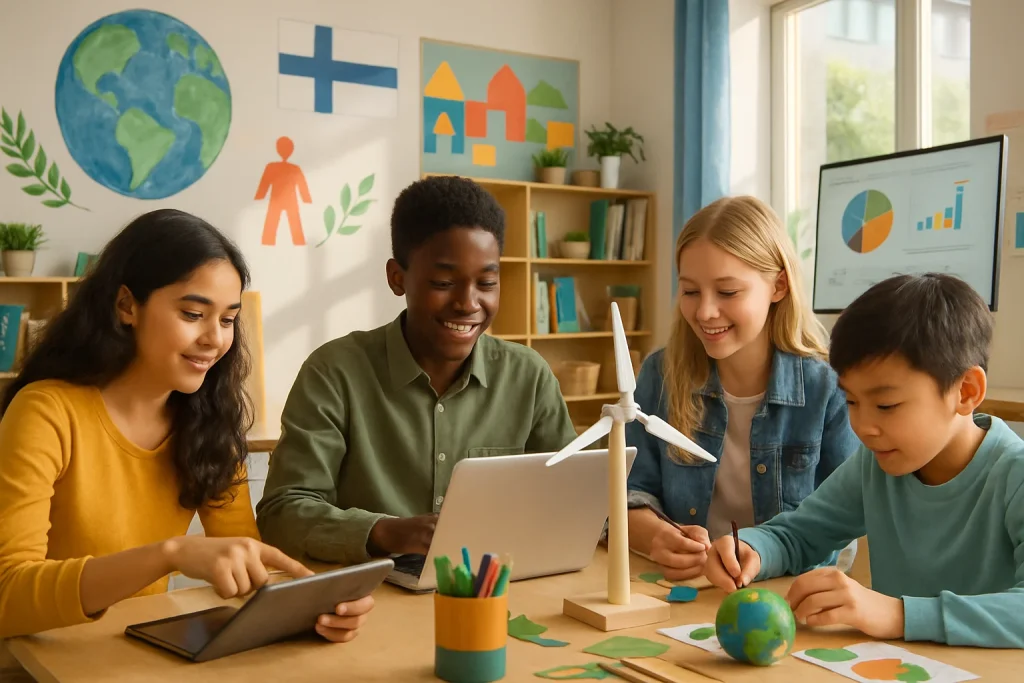
In this lesson, we will delve into the essential components necessary to establish a holistic educational framework that aligns with the core values of Finnish education. The Finnish educational system is renowned for its holistic approach that fosters the comprehensive development of students. This model prioritizes the interconnection of various elements, including cultural values, social environments, and individual learning experiences, thus creating an enriched learning atmosphere.
By the end of this lesson, participants will be equipped to integrate these foundational aspects into their teaching practices, ultimately enhancing the educational experience in diverse settings. This integration necessitates a nuanced understanding of the key components of a holistic framework, an appreciation for community and parental involvement, an iterative feedback process, and the design of future-ready learning environments.
Key Topics:
-
Key Components of a Holistic Framework
An exploration of the critical elements that constitute an effective holistic framework in education. This includes the integration of knowledge across disciplines, consensus on values, and the cultivation of student agency. -
Community and Parental Involvement
Understanding the vital role of collaboration with families and the local community, which enriches the educational experience and supports students’ connection to their cultural and social environments. -
Feedback and Adaptation of Educational Practices
Strategies for utilizing feedback to refine teaching practices continually. This discusses the necessity of adaptability in education to respond to changing societal needs and the evolving landscape of student learning. -
Designing Future-Ready Learning Environments
A critical look at the characteristics of learning environments that prepare students for the complexities of the future. This includes leveraging technology, fostering creativity, and promoting sustainability to better engage students in their learning journeys.
Together, we will develop a comprehensive educational model that reflects Finnish values and nurtures the growth of well-rounded, informed citizens capable of navigating an increasingly interconnected world.
