


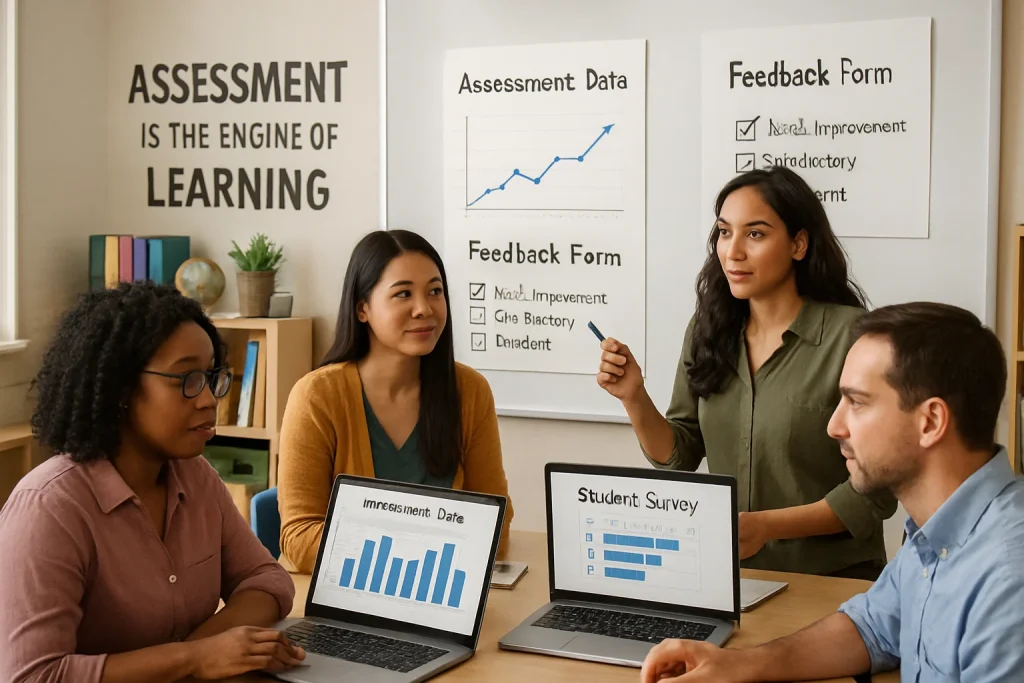
In the realm of education, assessment is not merely a tool for measuring student achievement; it is an integral component that informs continuous curriculum development and enhances the overall educational experience. This lesson, titled "Adapting Assessment for Continuous Improvement," is designed to explore effective assessment practices widely recognized within the Finnish education system. By focusing on a student-centered approach, this lesson illustrates how assessments can support holistic learning and foster individual growth.
In Finland, assessment is recognized as a dynamic process that aligns with both the national curriculum and the personal learning goals of students. When conflicts arise between the prescribed curriculum objectives and the unique aspirations of learners, the latter takes precedence, underscoring the Finnish educational commitment to prioritizing student individuality. Assessments are conducted with continual reflection on student progress, facilitating ongoing adjustments to both curriculum and instructional practices based on data-driven insights and constructive feedback.
Throughout this lesson, participants will delve into four key topics that encapsulate effective assessment strategies that prioritize continuous improvement:
-
Formative and Summative Assessments: Understanding the differences and applications of these assessment types to enhance learning outcomes.
-
Assessment for Learning: Exploring strategies that use assessment as a tool to drive instructional practices and engage students in their learning journey.
-
Feedback Mechanisms in Education: Discussing the essential role of feedback in nurturing student development and facilitating curriculum adjustments.
-
Evaluating Student Performance and Curriculum Effectiveness: Analyzing methods for assessing student performance while simultaneously evaluating the curriculum’s effectiveness in meeting student needs.
By advocating for assessment practices that align with the principles of continuous improvement, educators can foster an environment where meaningful learning experiences flourish. Join us as we explore these essential concepts that can transform the approach to assessment in education.
